Embracing the Quiet: The Strengths of Introversion in the Workplace

In the workplace, there’s often an unspoken pressure to be louder, more social, and more ‘visible.’ But as a quieter person, I’ve come to embrace the fact that not everyone thrives on constant chatter or group activities. Recently, my manager pulled me aside to give me some very positive feedback about my work so far, but in amongst the good news he mentioned some feedback from my colleagues. He described me as ‘quiet’ and suggested that I should ‘come out of my shell’ more – implying that there’s something about my quieter nature that needs fixing.

This experience made me reflect on how being quiet is frequently misunderstood. It’s often seen as a flaw or a lack of participation, when in reality, it’s simply a different way of engaging with the world. I’m not shy, weak, or scared; I just operate in a quieter, more reflective way. This is definitely largely due to my speech and language difficulty and the anxiety living with it brings; with family and close friends, I can be a lot more talkative and confident socially. But it is also just part of my personality, part of who I am, and this approach brings its own set of strengths which are often overlooked.

Being quiet allows me to be highly observant. I notice things that others might miss – small details, patterns, and nuances that often lead to deeper insights or more thoughtful solutions. I’m not the loudest in the room, but that doesn’t mean I’m not paying attention. Quite the opposite: I’m actively listening, absorbing information, and analysing situations before speaking. This helps me make well-considered decisions, which is a strength I’m proud of.

I also care deeply about the quality of my work. While some might thrive on multitasking and frequent conversation, I prefer to focus on getting the job done, and done well. My attention to detail and my desire to meet high standards are a direct result of my quieter nature. I’m not distracted by noise or drawn into endless discussions – I’m simply focused on doing my job to the best of my ability.

It’s important to note that being quiet doesn’t mean I’m antisocial or uninterested in connecting with my colleagues. I enjoy meaningful conversations and understand the importance of building relationships at work. I regularly greet my team, check in with them, and engage in conversations about both work and personal topics. However, I don’t feel the need to fill every silence with small talk. I’m not disengaged; I’m just more selective about when and how I participate in conversations.

Me summed up!

I also want to challenge the misconception that being quiet means being passive or lacking assertiveness. When needed, I’m fully capable of standing up for myself and expressing my opinions clearly, and I have mounts of confidence to do things alone. My quieter demeanour doesn’t make me any less confident or competent. It’s simply a different way of interacting with the world – one that prioritises thoughtfulness over constant expression.

One of the most frustrating aspects of this feedback is the assumption that I need to change to fit a more extroverted mould. It seems like workplaces often value extroversion – the people who are always in the middle of the action, chatting and networking. But this focus on extroverted behaviours can overlook the strengths that quieter individuals bring. I wish there was more acceptance of different personality types in the workplace. We all have unique contributions to make, and introversion is not a flaw that needs to be fixed.

In fact, being quieter often makes me a better team member. I’m hardworking and dedicated, preferring to get on with the task at hand rather than being distracted by the constant hustle and bustle. I care deeply about my work, and my ability to stay focused in a noisy environment is a testament to that. My approach may not be particularly noticeable, but it’s effective – and I believe that’s something worth respecting.

Ultimately, there’s no one right way to contribute in the workplace. Some people bring energy and enthusiasm through conversation and collaboration, while others, like me, bring a quiet focus, deep listening skills, and analytical thinking. Both are valuable, and both deserve to be recognised equally.

Exactly this!

It’s interesting how people never say, ‘you’re so loud’, in the same way they comment on someone being quiet. If you were to ask someone why they talk so much, it would likely be seen as rude or offensive, yet calling someone ‘quiet’ and questioning why often gets treated like neutral or even helpful feedback. It creates a double standard where quieter individuals are subtly pressured to change, while louder behaviours are more readily accepted, even celebrated. This reveals an imbalance in how different communication styles are valued, with quietness often unfairly cast as a flaw, while more extroverted traits are normalised.

I appreciate my manager’s intention in giving feedback, but I don’t believe I need to ‘come out of my shell’ to be a better team player. It isn’t a ‘shell’ in any case, it is just who I am. My quieter strengths – my focus, my careful listening, my ability to observe and think critically – are just as valuable as the more outwardly visible ones. It’s time we embraced the diversity of personalities in the workplace and recognised the power of being quiet.

At the end of the day, I’m at work to get the job done and get paid, not to make friends. While building relationships with colleagues is important for a healthy work environment, it’s not my primary focus. I’m there to do my work to a high standard, contribute meaningfully, and meet the goals of my role. If friendships naturally form along the way, that’s great, but I don’t believe it’s necessary to constantly socialise or engage in casual conversation to prove I’m a good team player. My professionalism and work ethic speak for themselves.

New pen pal

A low hum of chatter, faint beeping noises of phones and stressed passengers desperately trying to locate their reserved seats at each station stop, with huge suitcases blocking the carriageway and causing chaos amongst fellow commuters. Friday afternoon. I was on a CrossCountry train up to the city of York and was pleased to be able to make use of the complimentary wifi as I stared out the window, watching the world go by and observing people on the busy train.

It was just after 4pm and I must have just passed Derby when a facebook messenger notification popped up on my phone, from a choir friend explaining that a letter had been delivered to her addressed to me. Weird. She thought it was related to the Solihull Civic Award I won in 2017, but my head was spinning with trepidation and utter bewilderment. What could it be?

When I was sent a photo of the envelope I was stunned – it had 10 Downing Street clearly written on the back. My immediate thought was it could be a joke from someone – why would the Prime Minister be writing to me? It didn’t make sense. I needed answers to the dozens of questions I had. Perplexed was an understatement. The man sitting next to me must have sensed I was tense as he glanced at me when I was literally gawping at my phone in disbelief – what did he think was going on? My head was pounding, my heart skipped a beat. To make the tension feel unbearable, I had asked for the letter to be opened on my behalf as I was eager to know what it was. The agonising wait for a response from my mum explaining what it was felt like hours (when it was minutes in reality) – meanwhile I was feeling hot with dizziness.

Finally, this was a photo of the letter I received:

img_1677
Theresa May, my new pen pal?

I still don’t understand the process of how my information got passed on to 10 Downing Street, it’s a real mystery. My unanswered questions remain – why, when, how? Why did it get delivered to a friends address? Theresa was incorrect (like she is in many other ways) about the fact that my friend wrote a letter to her. My details were obviously passed on when I received the previous award – I never imagined my story would make it to Downing Street! To be honest, I also don’t feel like I really deserve this level of recognition; I am a Youth Champion for the Dyspraxia Foundation, and soon to be a Local Coordinator for the West Midlands, as well as other roles – but there are so many people in the UK doing more voluntary work, awareness raising and fundraising than me who deserve to be recognised for their hard work more so than me. My mate Theresa certainly thinks I deserved a letter from her though, personally signed! Astounding.

http---o.aolcdn.com-hss-storage-midas-4a566ad63abd92cc52b39525592cf45f-205349675-dbo1pomwaaawhra

When you consider the fact that I don’t agree with Theresa May and her politics, and she irritates me on a daily basis, it makes this even more amusing!

theresa-may-s-jokes-in-full-1026325
Me after seeing the letter from my new mate…

Anti-bullying Week 2018

This week (12th-16th November) is Anti-bullying week.

Since we stand out as being different, dyspraxia can make us an easy target for bullying. When I was at both primary and secondary school, I was fortunate of the fact that I was never severely bullied over a long period of time, although that doesn’t mean I was completely immune from the issue.

Looking back, I remember being very unhappy at my second primary school that I went to due to not having friends, feeling like the odd one out and being bullied by someone in my class – to make things worse, the teacher never recognised it was happening and so failed to rectify the problem. This bullying presented as both physical and verbal – pushing/shoving me as well as nasty name calling and mocking my voice. I did also have the occasional comments from pupils in different year groups who I didn’t know very well; when I spoke they would say ‘why do you speak like that?’, and ‘speak properly’ as they laughed at me in a mocking way. I hope that they wouldn’t treat differences like that now that they have grown up and (hopefully) matured! Children often don’t understand the fundamental values of treating everyone with respect etc, which is why it is so important to educate them on the importance of equality and being nice, and the potential devastating consequences bullying has on individuals.

main-anti-bullying-week

Secondary school was generally better as I made new friendships and gained a better understanding of my dyspraxia. I was diagnosed aged two but I personally didn’t have the understanding of it until I was around thirteen, when my mum explained it to me in the car one day and I did further research. Suddenly, everything clicked as to why I found things more difficult than everyone else. It made sense why I went through years of speech therapy when no one else did and why I originally went to a different school to my brother and sister to have this, why I learned differently and more slowly than my peers and had to put in extra effort into everything I did. This helped me with my self esteem in some ways, as I discovered it wasn’t my fault and I wasn’t weird, there was a reason for this level of difficulty.

fullsizeoutput_559

However, I did still have instances of mean pupils physically and verbally bullying me throughout my five years there. In particular, in year 11 I had to deal with a bad case of bullying which coincided with my eye condition diagnosis and difficulties there, and the stress of GCSEs – it wasn’t a good ending to my time there, which was unfortunate as I had gone through good times there as well. Likewise with primary school, I felt that they didn’t really do anything to stop it. These cases of bullying that I experienced throughout my school years has affected me to this day; it has knocked my confidence and self esteem, increased my social anxiety and perhaps contributed to my feelings of worthlessness – it has a detrimental emotional impact on individuals.

fullsizeoutput_557

It is also vital to understand that bullying isn’t just in schools: it can happen at work to adults too, as well as online and it can take many different forms. I wouldn’t necessarily say I was bullied in my last workplace, but I was discriminated against and treated unfairly by some members of staff due to my verbal difficulties.

Dyspraxia can also more likely make us feel victimised. Even if something is only mildly unkind, I can process it as severely bullying due to my sensitivity and longing to be accepted for who I am. We can be more prone to go through an emotional turmoil as we sometimes cannot process the world around us, making our perceptions exaggerated and distorted.

A few bullying statistics

  • 83% of young people say bullying has a negative impact on their self esteem
  • 45% of young people experience bullying before the age of 18
  • Children and young people with SEN are twice as likely to be bullied
  • Individuals who have been bullied are at the greatest risk for developing health problems in adulthood, over six times more likely to be diagnosed with a serious illness or a psychiatric disorder compared to those who have not been bullied
  • An estimated 5.43 million young people in the UK have experienced cyberbullying, with 1.26 million subjected to extreme cyberbullying on a daily basis
  • 64% of young people across the UK have experienced and been affected by bullying whilst at school.


fullsizeoutput_558

This year, anti-bullying week’s focus is on the theme of respect. This will highlight ways to challenge it/respond to it and prevent it. To find out more about how you can get involved and support this campaign, visit the Anti-bullying Alliance website for helpful resources and information. We should all stand up to bullying and raise awareness that it will not be tolerated anywhere, spreading the message to encourage everyone to think twice about their actions and the consequences that they will inevitably have on individuals. We may all be different, but we are all equal. Having dyspraxia or any other type of difference doesn’t make anyone less worthy of respect and equal treatment.

FB_POST_01_preview


My Driving Journey

Passing your driving test is one of the best feelings ever for anyone, but when you’ve gone through a lot to get to that point it makes it even more meaningful.

Before my 17th birthday, I was worried I wasn’t going to be capable of driving. It was one of the things dyspraxic people are said to find too difficult, with most having to learn in an automatic. Too much coordination. I was surprised when I found it no harder than my twin brother and was so pleased when I discovered I could drive a manual car and started having regular lessons. I passed my theory test just after my eighteenth birthday and I was ready for my practical, the next and final step to getting my full licence, being a qualified driver and being on the road unsupervised.

In November 2016 I was in a particularly dark place when I found out I had to cancel my booked January driving test as I didn’t meet the required standard for vision, despite previously believing I was able to read the number plate without a lens. I was really struggling with the prospect of not being able to drive, it felt overwhelmingly tough with every visit to the eye hospital ending with bad/unclear news. I’m surprised I didn’t have a breakdown! Meanwhile my brother was learning and passed his practical test first time, and although I was pleased for him I was really broken inside.

In March 2017, I got an RGP lens. This is, at times, very uncomfortable – it took a while to get used to, and that still didn’t guarantee to get my sight up to the legal requirement. Shortly after my marathon success in April, the lens was a tiny bit more bearable and I got the prescription altered. Although I doubted it all along, I read a registration plate from 20 metres! I think that because I didn’t want the crushing devastation again of thinking I could drive, then not being able to, my mind was preventing me from believing it right up until my first practical driving test in July. I’d practiced a lot along the areas roads and although I felt sick with nerves, I was prepared.

On the whole the first test went really well; I did the manoeuvre perfectly and the general driving was good with only a few faults. Probably due to nerves, I got slightly too close to a car near a roundabout and had to brake quite suddenly. Although I remained calm I kind of knew I’d failed from that point and I was right. I also made the mistake of telling everyone I had the test beforehand, which I now know is never a good idea. It put unneeded added pressure on me to pass, and I had to let everyone know the result afterwards.

The second test was pretty much a nightmare from the start. The preferred parking position threw me, the waiting room was silent and horrible, then I ended up with a particularly unfriendly examiner who took a disliking to me from the start when I was a bit vague. Because I was so nervous and I have a bit of difficulty with processing what people have said sometimes anyway, when he asked me a question I wasn’t expecting I wasn’t sure what to say and said the wrong thing, which he didn’t take too well. I made quite a few silly little minors as I just felt sick throughout the drive, as uncomfortable as you could be on a driving test. On an unfamiliar road, I was going at the speed limit and I didn’t anticipate a sharp bend ahead until too late, so needless to say I failed again. I felt so deflated after my second failure, more so than my first, but I managed to get another test within a couple of weeks exactly.

This was it. I was determined this time would be different. Unless I had to do the reverse bay park, then I would have probably failed! My usual rescue pastilles were there, the same ones I’d used for my previous tests. There seemed to be a more relaxed atmosphere beforehand this time, people chatting and music playing from a radio. There was just a good vibe, the complete opposite of last time. I’m so relieved I ended up with the nicest examiner you could probably get. I had a bit of a nightmare at the beginning with the independent driving, basically not being independent at all as I kept indicating the wrong way and nearly going the wrong way. This never happened before; it was either a particularly dyspraxic moment, or nerves, or likely both. I was convinced I failed on that as she kept having to direct me. I met some idiot on the road who beeped at me for no reason, and she made a lighthearted joke about it which reassured me. Throughout the drive she really made an effort to calm me a bit as I told her I was nervous. She chatted to me about what I was doing, if this was my first test, and a few other things. Something inside me allowed me to blurt out about my other tests and I talked to her quite a lot. I honestly think this made a massive difference. You can’t choose the examiner you get, but it’s a huge help and I was able to drive better than I ever had done before because of it. When I pulled back into the test centre I seriously thought it could have gone either way. When she said not only had I passed but that I’d only made three minors I felt on top of the world; it’s indescribable. Over the moon is an understatement. I knew it, but I found it amazing to hear her say ‘you can drive unsupervised from now on, independently.’ She said she knew how much it meant to me, which I know was her being friendly, but she has no idea about my rollercoaster ride with driving!

Lots of messages poured in throughout the day and I can honestly say I hadn’t felt this happy and relieved for ages. I have my little red car that I’ve dreamed of having for years and it feels surreal. I love the independence of it so much, I now cannot imagine being without my car. I wish I could have known through that awful time that there would be light at the end of the tunnel, that it would all be ok, that I would be able to drive soon. That would have saved me a lot of suffering! I seriously never thought the day would come, what a rollercoaster of a journey it was!

Thank you for the optometrists at the hospital for their patience and not giving up on me.


trumancapote1.jpg

DH2pq1yW0AEz1-J.jpg

Dear Lottie

To my beautiful Lottie,

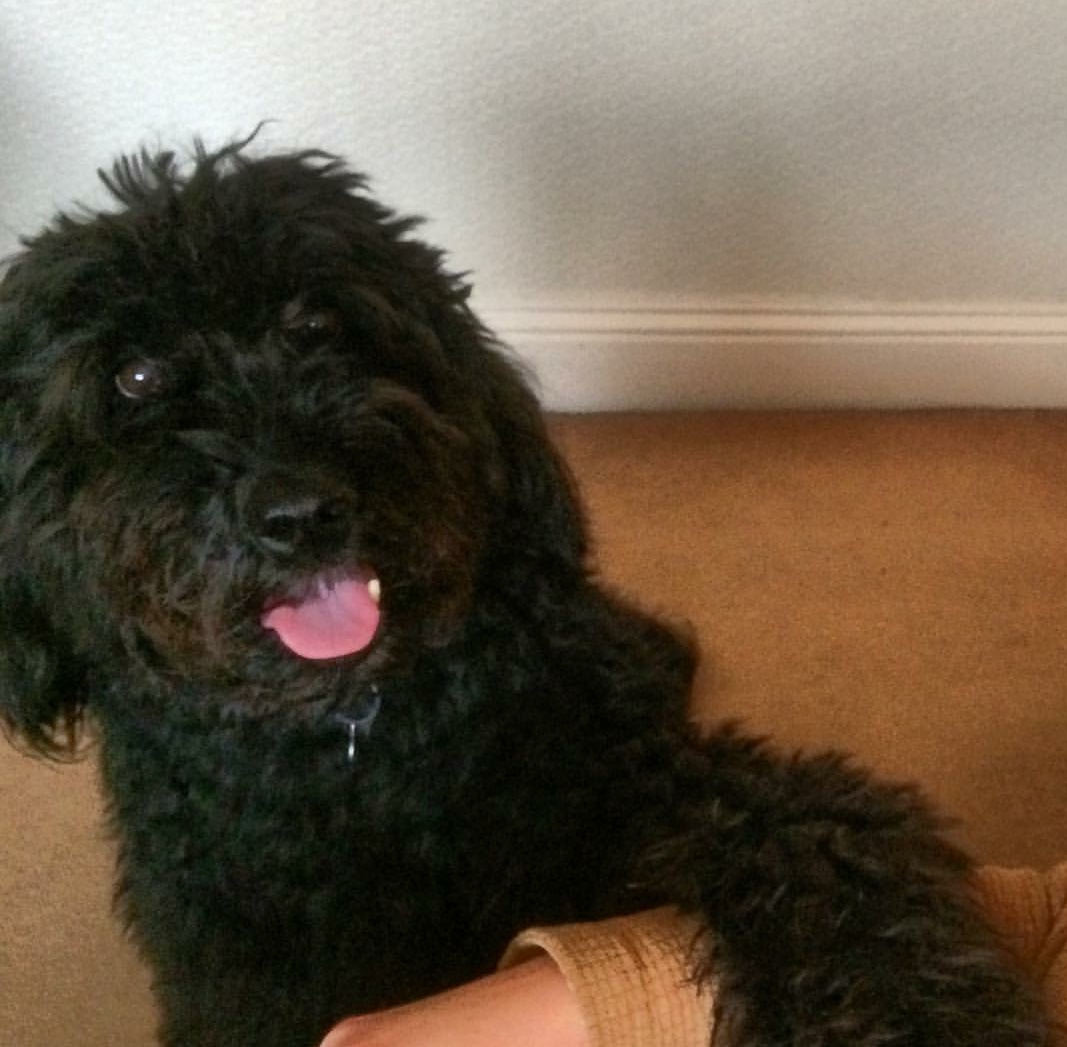
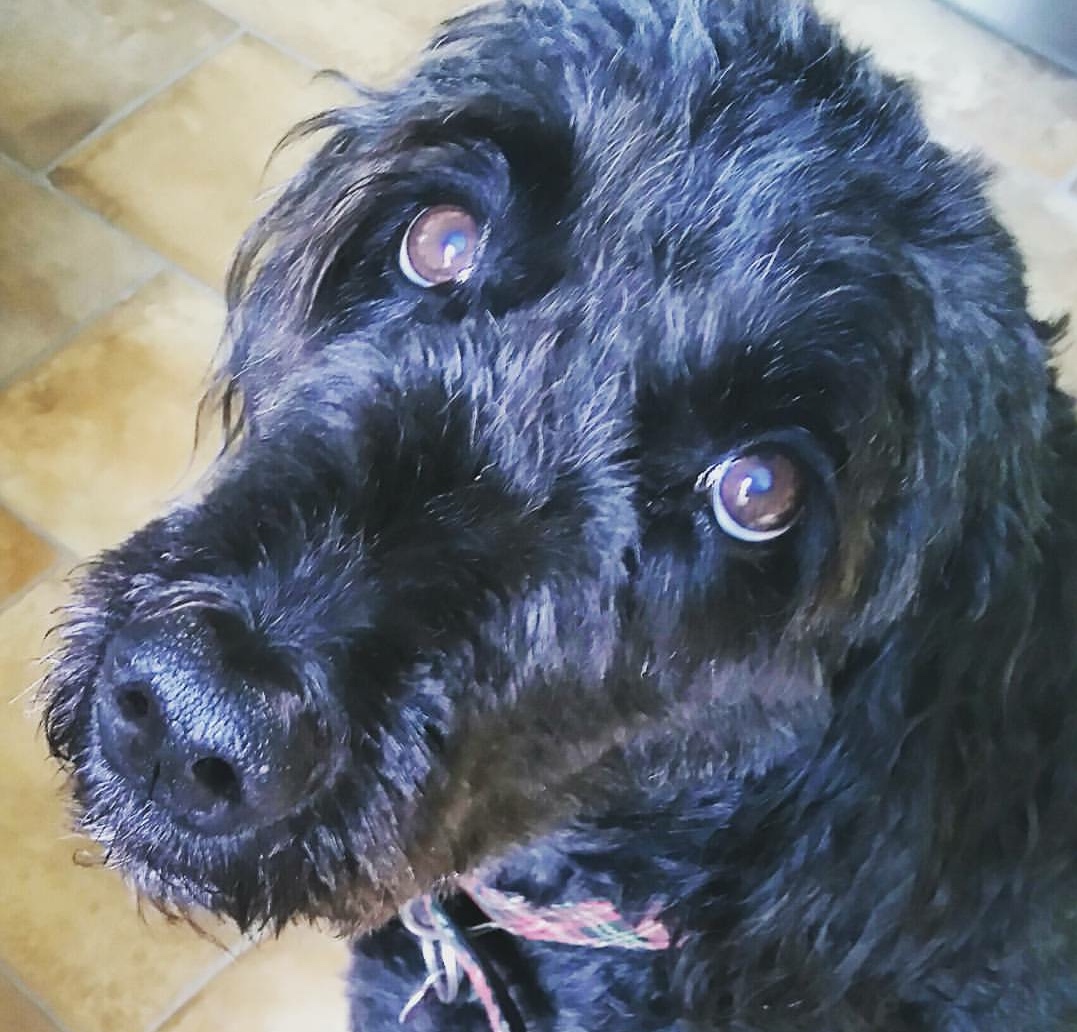
I was so excited when I came home from school one day and it was announced we were getting a dog. I was eight years old and had always wanted a four-legged friend – although I could never have imagined that you would mean so much to me. It was love at first sight and I never thought that one day you wouldn’t be here anymore. Deep down I knew that one day you would have to leave me, but I always imagined you with me throughout my life.

Remember your first trip to the beach, in Barmouth 2007? You were such a naughty puppy, refusing to come back on the lead. Since then we have shared lots of holidays and fun times swimming in the sea together as well as some lovely, long countryside walks. Whatever I did, wherever I went, you were nearly always by my side.

You were by no means a perfect puppy to most people, or a perfect dog; you were over-excited (even in your old age), always jumping up at people and being over bearing, often being mistaken for a puppy when you were an eleven year old senior. Raiding picnics and stealing food, rolling in disgusting things, wallowing in muddy puddles and pulling down curtains also featured in your life a lot. But you were perfect to me; you were always much more than a pet. You were my best friend, my sister, a true family member.

fullsizeoutput_44c

As I was growing up and getting older, so were you. I could walk further whereas you could walk less. I became stronger and you became weaker and frailer. Arthritis eventually meant a short plod round the top of the park. I’m sorry for sometimes getting impatient and annoyed when you were slow and doing a significant amount of sniffing. I’m sorry for sometimes moaning when I had to take you out in the rain or early morning. I’m sorry for wishing I didn’t have to share my crisps with you, always trying to hide them from you to make you go away. I’d give anything now to have those moments back.

fullsizeoutput_44e

Out of all the teachers I’ve had over the years, you have always been the best. You reminded me about what was truly important as you convinced me to enjoy a sunny walk outside and just to live in the moment rather than fret about the future. You have taught me the meaning of faith and trust, patience and hope. It was your waggy tail and smiley face every time I came through the door or when you greeted someone that taught me the importance of enjoying every day and treating everyone with kindness. I have had many ups and downs in life, and through them all you were a constant source of comfort. A paw on my knee and a lick on my face, you were always there for me through it all. Even at my lowest, you never judged me and instead showed me companionship when I needed it most. I enjoyed the times where I slept by you, mattresses side by side – your snoring provided me with a strange sense of security and calmness. You also provided me with much amusement and laughs, whether it was because of your funny yawn or something else.

fullsizeoutput_44f

That horrible, dreadful day came round all too soon. It was the worst thing imaginable to see you in so much distress and discomfort all of a sudden. By the evening of that Saturday you were gone and I clearly remember our last moments, while the vet was preparing the injection. I hugged and kissed you, telling you how much I loved you and how much I’d miss you, despite the fact you were sedated so you didn’t recognise me anymore. I hope that you were still comforted by your family beside you in your last moments on earth, and you knew how much we loved you. I was unable to control my emotion as tears rolled down my face hysterically. We removed your collar and I watched in agony and disbelief as the vet administrated the final injection to take my best friend away, while my mum was hugging you close. Within seconds you had passed peacefully, and we left your lifeless body lying there. When you left us, I felt a part of me did too. I still sometimes find it hard to believe and come to terms with that you aren’t here anymore, and you’re not coming back either.

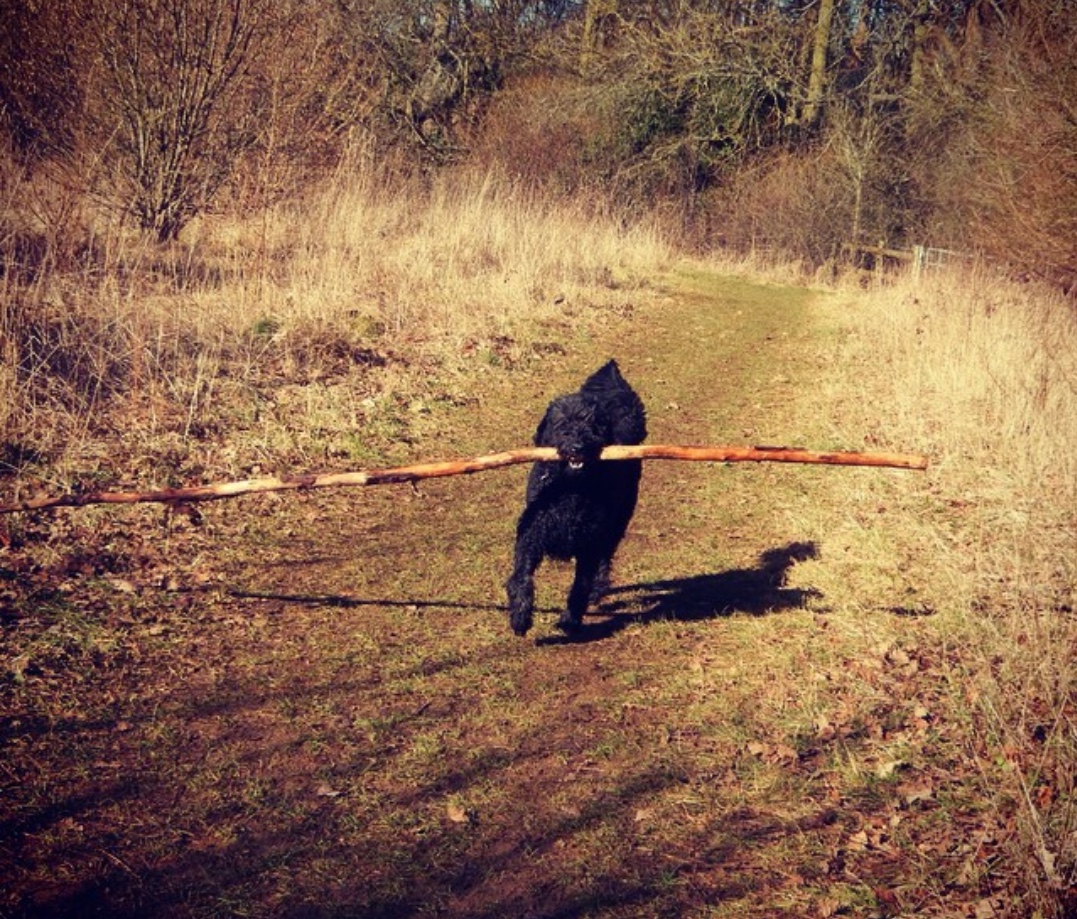
I like to think of you in Heaven, across the rainbow bridge, running in the grass chasing squirrels freely across the sky with your waggy tail, despite not believing in the after-life. I hope that one day we will meet again, in the sky, where we will suddenly see each other, reunited forever. Until then, I will try and remain strong and remember that you are always close to me in my heart. Months have passed and yet I’m still grieving. I still sometimes expect to see you at the window. I forget you’re not here and still come down at night when I can’t sleep to be comforted by you, only to see an empty space where your bed was. I still find tennis balls in the garden, which used to be part of your ever-growing collection. Whenever I see a huge stick I think of you prancing proudly with it, darting past with half a tree in your mouth.


fullsizeoutput_44d

IMG_20180922_191408

Watching you bond with Frank was a dream come true for me, and your legacy lives on. You have taught him how to come and greet people at the door, lick the plates clean and comfort me when I need it, although no one could ever replace you.

FB_IMG_1537639102746

I’m forever grateful to have had such a special friend in my life, a bond that I can definitely never have again. Thank you for everything, for showing me so much love and friendship and for being such a lovely companion. My love for you was so deep and strong, I hope you realised how much you were adored by everyone who knew you.

A lot of people won’t understand that I’m not just grieving for a dog, I’m grieving for a family member. Grief is a complicated thing and it doesn’t go away, even for a cherished ‘pet.’ I feel sorry for anyone who hasn’t had the privilege to have a special bond with an animal – you have enriched my life in more ways than I ever imagined possible.

Love you forever my sweet Lot Lot

From your best friend xxxxxx

fullsizeoutput_44b


‘Until one has loved an animal, a part of one’s soul remains unawakened’ -Anatole France