I used to say I’d never do a marathon again, or at least not for a very long time.
After running the London Marathon in 2017, aged 18, and crossing the finish line in 4:46:24, I was absolutely shattered. It was one of the hardest yet most exhilarating things I’d ever done. But after it was over, I genuinely thought, once is enough. I’d ticked it off the list. Job done.
London Marathon 2017
But this year, something changed.
As marathon season rolled around, I watched so many of my fellow club runners taking on big races — their training updates, their excitement on race day, the proud medal photos after. One by one, people started signing up for the next year. I kept telling myself I wasn’t tempted… but, clearly, I was lying to myself.
Before I knew it — caught up in the hype, the energy, and that classic runner’s FOMO — I’d signed up too on the spur of the moment.
And ever since then, I’ve felt a strange mix of excitement and apprehension. Because this time, it all feels so much bigger.
The Goal (and the Pressure That Comes With It)
Post marathon celebration
When I ran London back in 2017, my goal was simple: just finish. There was no pressure, no time target, and definitely no structured plan. I ran when I could, especially paying attention to the key Sunday long slow runs, and went into race day with only one mission – to make it to the finish line.
It worked; I got there. But this time around, that’s not enough.
Now, I want a personal best, and ideally, I want to break 4 hours.
With my current half marathon PB and average times between 1:49 and 1:51, I know sub 4 is theoretically within reach. But theory and reality are two very different things, and a time is never guaranteed. All sorts of unpredictable things could slow me down; a niggling injury I might pick up, the weather conditions on race day, or just how much energy I have and how strong I’m feeling on marathon day. Even the sheer difficulty of keeping up a consistent pace across 26.2 miles is no mean feat, regardless of other factors!
This time, however, I’m not content with just ‘winging it’ – I’m older, stronger, fitter and wiser. I want to see what happens when I really give it my all.
And here’s the thing: no one else is putting pressure on me. It’s entirely self-inflicted. I want to see what I can do with proper training, structure, and commitment. But that’s also what makes it daunting. Because once you set a goal, you give yourself something to lose. How disappointed will I be if I don’t quite manage to break 4 hours? It’s difficult to tell.
Doing It Properly This Time
When I trained for London, my ‘plan’ was basically: run often enough and hope for the best. I’d increase my long runs gradually each week, throw in a few shorter sessions here and there, and cross my fingers that it would all be fine on the day.
And, to be fair, it was fine. But I know that approach won’t possibly cut it for a sub 4 hour marathon.
This time, I want to do it properly – with structure, purpose, and professional guidance. Intervals, a tempo run and a slow long run are the basics, with some strength work and cross training scattered into each week, but I really feel I need a concrete plan in front of me this time. I’ll officially start training in January, but right now I’m doing the groundwork: researching, thinking through my approach, and liaising with a coach to get a plan in place.
It feels serious now – and that’s both exciting and terrifying.
Finding structure
The more I read about marathon training, the more I realise how overwhelming it can be. There are so many plans out there – beginner, intermediate, advanced, low mileage, high mileage, heart rate, pace-based – and they all promise results. But which one is right for me? How am I meant to know what fits my lifestyle and goals? It is a real minefield.
That’s exactly why I’ve started investigating working with a running coach.
I’ve realised that I don’t just want a cookie-cutter plan – I want personal guidance. Someone who understands my goals, my current fitness, my schedule, and my tendency to overthink. Someone who can help me balance the mileage, speed work, and recovery without burning out and injuring myself. Someone who knows what it takes to run a sub 4 hour marathon strongly and confidently.
It feels like a big investment, both in time and cost, but if I’m serious about doing this properly, I think having a coach will be key. After all, I wouldn’t try to build a house without a blueprint, so why should marathon training be any different?
Strength Training: The Missing Piece
When I trained for London, I didn’t do a single strength session. I thought running was enough – and for a ‘just finish’ attempt, maybe it was. It got me round, it got me to the finish on The Mall. But for performance? Not a chance.
Now, I know strength training isn’t optional. It’s essential for staying injury-free, improving form, and building endurance. Stronger runners don’t just move better; they recover faster, handle higher mileage, and cope with fatigue more efficiently.
Still, I’ll admit the strength side feels unfamiliar. I’m figuring out what to prioritise: squats, lunges, deadlifts, and core work seem to be the big ones – and how to fit it into my week without overloading myself. I have never found strengthening work much fun and would much rather just do running!
Fuelling: Learning the Science Behind It
My 2017 fuelling strategy was… basic and minimal, to put it kindly. I stuck to a banana just before the long run, and during? My plan was essentially, ‘grab a gel when I feel tired.’ Somehow, it worked in the sense that I didn’t hit the wall too dramatically, but it’s definitely not the most scientific approach.
This time, I want to learn the science behind fuelling properly. That means practising nutrition during training, figuring out which gels or drinks work best for me, trialling different pre and post run food and drink, and training my gut as much as my legs.
Fuelling can make or break a marathon. It’s about timing, testing, and understanding what your body needs over hours of effort. I’m already reading up on carb-loading, fuel timing, and even hydration strategies; things I barely gave a thought to last time.
It’s a steep learning curve, but it’s also part of what makes this round so interesting. I’m not just running. I’m learning how to run smarter.
The Mindset Shift
The mental side of running feels like a whole new challenge. Back in 2017, I didn’t know what to expect, so I just ran. I had no idea how tough those last miles would feel, or how much of it would come down to sheer grit.
Now, I know exactly what’s coming. I have a pretty good idea of what ‘the wall’ feels like, how the crowd noise blurs when you’re deep in fatigue, and how easy it is to start doubting yourself. That awareness is both powerful and intimidating.
So this time, I’m going to work on my mindset as much as my mileage: learning to trust the process, stay patient, and zoom out when training feels tough. A coach might help here too: keeping me accountable, realistic, and focused when my brain inevitably spirals mid-training block.
Feeling in the Dark (and Learning as I Go)
The funny thing is that even though I’ve run a marathon before, it still feels completely new. I know what it’s like to run 26.2 miles, but I don’t yet know what it’s like to train properly for it. I feel as in the dark as I did the first time.
And honestly? That’s what makes this both exciting and extremely scary.
Right now, I’m researching, planning, and building a foundation for January. Being someone who cannot resist stationery, I’m also on the hunt for a marathon log/journal or anything I can use to physically write down my training runs and reflect on how they felt. I feel a bit in the dark, yes – but I also feel motivated. Because this time, I’m not winging it. I’m taking the time to understand what I’m doing and getting help where I need it: whether that’s through structured plans, strength work, or guidance from a coach.
Looking Ahead
January marks the official start of my marathon training journey, but the mental prep has already begun. I know this training block will be tough. Marathon training means sacrificing plans, late Saturday nights and my cherished Sunday morning lie ins to run in all kinds of weather on a grey, cold January morning. I know there’ll be days when I question why I signed up again.
But deep down, I also know why I did.
Because there’s something special about chasing a goal that scares you a little. About taking something you once did ‘just to finish’ and seeing how far you can push yourself when you give it everything, how strong and tenacious and stubborn the human spirit is, how fast my legs can go.
So here’s to marathon training, round two — to structure, strength, fuelling, and a coach to pull it all together. To nerves, excitement, and the satisfaction of seeing progress unfold.
And hopefully, come race day, to crossing that magical finish line again — a little faster, a lot stronger, and even prouder of the sheer effort and determination it took to get there.
A rare occasion I went for a beautiful 6am morning run!
‘You’ll never do that.’ These were the sceptical words of my dad when I announced my plan to train for and conquer the local 5 mile Fun Run round our village. Little did he know, those words ignited a fire within me, sparking my journey into the world of running. Motivated by his doubt, I embarked on a path that transformed my life in unexpected ways. Although there have been breaks and moments of frustration along the way, the love/hate relationship with running that many runners know all too well has kept me coming back to it time and time again.
Local annual Fun Run when I fundraised for Mind
I still remember those early days vividly, back when I was 13. Ignoring conventional wisdom and dressing in jeans and a hoodie, I embarked on laps around the local park. It must have been a comical sight – a teenager stubbornly refusing to change into sports clothes, defiantly running in whatever I happened to be wearing that day. I didn’t want running to feel like another mandatory PE class at school; I wanted it to be my own, personal challenge. I remember my first pair of basic white running trainers, a pink t-shirt, and shorts that my mum bought me when she knew I was serious. She soon managed to coax me out of my clothes and into suitable sports attire!
First local Fun Run in 2012 (have done them consecutively almost every year since)
Fast forward to today, now in my mid twenties, I proudly consider being a runner an integral part of my identity. Whether it’s a brisk morning jog or a challenging half marathon, running provides me with a profound sense of purpose and fulfilment that transcends the miles I log.
My current PBs for each distance. I’m not one of the fastest, but I’ve never been particularly motivated by time!
Physically, running has transformed my health. It has strengthened my muscles, improved my cardiovascular endurance, enabled me to burn calories and helped me maintain overall fitness. The benefits ripple into my daily life, where I find myself more energetic, alert, and resilient to stress. Mentally, running is my sanctuary. It’s a time when I can clear my mind, process my thoughts, and find clarity amidst life’s complexities. The rhythmic cadence of my feet hitting the pavement becomes a form of meditation, grounding me in the present moment and fostering a deep sense of inner peace.
Beyond the personal benefits, I feel a sense of empathy for those who are unable to run due to musculoskeletal issues, health conditions, or other constraints. Running, to me, is a privilege – one that I cherish deeply and wish that everyone could experience.
Boosting mental health
Overall, running has become one of my most important primary tools for managing and improving my mental health. It is the main reason I run, to keep myself on an even, stable keel as much as I can. Having struggled quite severely with poor mental health in the past and definitely still being a vulnerable person to life’s stressors and low mood, I find that running offers benefits that often surpass those of my antidepressants. While I understand the importance of my medication and currently rely on both, running provides a sense of stability and wellbeing that I believe will be crucial in eventually reducing my reliance on medication. Ultimately, the main reason I run is to enhance, maintain, and stabilise my mental health, making it an indispensable part of my overall wellness strategy.
Running provides a therapeutic outlet for me to process my problems, traumas, and daily stresses in a way that sitting still never could. The physical demands of running – remembering to breathe, managing fatigue, and navigating my route – prevent my mind from sinking too deeply into negative thoughts. The need to focus on my breathing, the complaints of my body yearning for a break, and the constant awareness of the route all serve as a mental distraction. This forced diversion helps alleviate the mental torture that often plagues me when I’m inactive.
Whatever my mind is currently ruminating on or whatever problems I currently have still get worked on subconsciously while running. I can go out for a run when feeling upset, anxious, or frustrated and by the end of the run I will be more able to look at the issue objectively without being clouded by the emotions I felt beforehand. In essence, I think it simply gives me time to think and disconnects my thoughts from my feelings and behaviours, preventing the negative knee-jerk reactions.
Running also offers a meditative quality, compelling me to be present and aware of my surroundings, like traffic and the changing scenery. This awareness helps me avoid becoming overly absorbed in my internal struggles. The rhythmic pounding of my feet on the pavement, the sound of my breath, and the flow of movement create a grounding effect, anchoring me in the moment. Whether I’m running alone, enjoying the solitude and personal reflection, or with a group, relishing the camaraderie and shared experience, the benefits to my mental health are undeniable. Although running can’t cure my anxiety and low mood, it significantly alleviates these conditions. Rarely do I regret going for a run; the worst outcome is not feeling much different to how I felt before, but even then, I still benefit from the physical exercise. The act of getting out and moving is a victory in itself – something is always better than nothing.
However, running isn’t always easy, especially when I’m experiencing acute mental health challenges. On days when my mental health has been at its lowest, simply getting out the door can feel like an insurmountable challenge. It’s a mental battle where I must muster every ounce of willpower just to take that first step. Medication often adds to this struggle, making me feel sluggish and lethargic, as if I’m running through sand, making it nearly impossible to reach the pace I know I’m capable of. This discrepancy between what I want to achieve and what my body can do can be incredibly frustrating, adding another layer of challenge to my runs.
During these tough runs, or when I’m simply having a bad running day where I hate it and struggle with it for no apparent reason, I’ve developed a mental technique of breaking down the run into smaller components. I tell myself that I can definitely manage to run to the next tree, lamppost, or the end of the road. Once I reach that point, I reassess whether I can keep going. This technique also helped me during marathon training – I would tell myself that after reaching ten miles, I could manage another three, and so on. This approach makes even the toughest runs more manageable, one step at a time.
Despite these challenges, there’s almost always a moment during a run where I forget how awful I feel and start to appreciate my surroundings, especially when I’m in nature. The beauty of a wooded trail, the serenity of a quiet park, or the vastness of an open field can provide a much needed escape from my worries. These moments of connection with nature and my surroundings can be profoundly healing, offering a temporary reprieve from mental struggles.
Many of us run with the finish line in mind, driven by the anticipation of the post-run euphoria. We know that completing a run will boost our mood, not just for the rest of the day but for much of the coming week. This ‘runner’s high’ significantly lifts my spirits, providing a sense of accomplishment and wellbeing that can be elusive in other areas of my life. The endorphins released during a run help combat feelings of anxiety and depression, leaving me feeling more balanced and content.
Ultimately, if running means I can avoid increasing my dosage of sertraline, I’m willing to endure the physical toll it takes on my body. The mental clarity and improved mood I gain from running are well worth the occasional soreness or fatigue. Each run, no matter how challenging, is a step towards better mental health and a more positive outlook on life. The resilience and strength I build through running extend beyond the physical, helping me navigate the complexities of living with mental illness.
London Marathon
The London Marathon became a crucial focus and distraction during one of the most difficult years of my life. I was in a dark place, grappling with profound misery due to a college course I hated and the added frustration of being unable to drive because of my visual impairment, watching my brother learn and pass his driving test. These challenges left me feeling trapped and despondent, but training for the London Marathon provided a positive and empowering goal to work towards.
Amidst the gloom of my daily struggles, the marathon emerged as a beacon of hope. It gave me something tangible and uplifting to strive for, shifting my attention away from my immediate troubles. The rigorous training schedule demanded my commitment and effort, effectively diverting my mind from the negative thoughts that plagued me. Each run, each mile, brought a sense of progress and accomplishment, gradually lifting my spirits.
The physical exertion of running helped release pent up stress and anxiety, providing a much-needed outlet for my emotions. As I pushed my limits and built my endurance, I also discovered a growing sense of resilience within myself. The challenges of my college course and visual impairment still existed, but the marathon training empowered me to face them with renewed strength and determination.
Moreover, the anticipation of participating in such a prestigious event filled me with excitement and purpose. The thought of running alongside thousands of others, sharing the experience of crossing the iconic finish line, became a powerful motivator. It connected me to a larger community of runners, each with their own stories of perseverance and triumph.
Fundraising for Fight for Sight, the eye research charity, added another layer of meaning to my life. Organising cake sales, tombolas, and raffles at my community choir, Christmas fundraiser and other events proved to be an incredibly rewarding challenge, another thing to shift my attention to rather than my inner anguish. Thanks to the incredible generosity of others, I raised nearly £5000, which will support research into new treatments and cures for eye conditions and visual impairments.
In essence, the London Marathon was more than just a race; it was a lifeline during a time of deep struggle. It gave me a positive focus, helped me rediscover my inner strength, and provided a sense of achievement that countered the negativity in my life. Through the discipline and dedication of marathon training, I found a way to reclaim a sense of purpose and joy, proving to myself that I could overcome the obstacles in my life.
London Marathon, 23rd April 2017. A day I’ll never forget and will treasure forever!
Joining a running club has been incredibly beneficial for me, especially given my disability and subsequent speech and language difficulties. When I have a shared interest with others, like running, conversations come more naturally. The common ground provides a foundation for communication, making it easier to connect with others; it is easy to ask someone if they have any races coming up, to ask them about a running event they have recently completed or to get their opinions on different races. There’s also no pressure to talk, as the primary focus is on running. This creates a relaxed environment where I can engage with others when I like, without feeling self-conscious about my speech. Being quieter is hardly noticed by anyone, as it is not about being talkative. Equally, there are regular social events organised by the club so I can always go along if I feel like challenging myself and stepping out of my comfort zone, but there is never any pressure.
In school, I was often underestimated because I struggled with team sports due to my dyspraxia. My coordination issues made participating in traditional sports challenging, and my PE teachers were reluctant to encourage me to join the cross country team when I first showed interest. This lack of support knocked my confidence, making me feel inadequate in sports. However, I discovered that running was something I could excel at independently. It became a personal challenge that I was determined to overcome, often pounding the pavements after school to unwind from the day.
Proving myself as a capable runner was incredibly empowering. Despite initial reluctance from my PE teachers, I persevered and eventually earned their respect and a place on the team. I achieved third place out of all the schools in the region in cross country, a significant accomplishment that boosted my confidence. Additionally, I regularly competed in the 1500m event during sports days, where I secured second place. These achievements validated my abilities and demonstrated that I could succeed despite the challenges posed by dyspraxia and my speech difficulties.
Cross country champion!
The running club has further solidified my confidence. Being part of a group with a shared passion provides a supportive community where I feel accepted and understood. Running with others who share similar interests helps me to improve my social skills in a low-pressure environment. The encouragement and camaraderie within the club are instrumental in helping me realise my potential.
Another significant source of motivation for me is Strava. This platform not only allows me to track my progress but also lets me see routes that other runners have taken. The sense of community on Strava is incredible – runners from my club and beyond offer encouragement and leave supportive comments on my runs. Sharing my own routes and achievements, while also celebrating those of others, fosters a sense of accountability. It’s inspiring to be part of such a vibrant and positive community where everyone is cheering each other on to reach their goals and explore new horizons.
Directions
Running has significantly improved my sense of direction and allowed me to discover new routes, offering both practical benefits and enriching experiences. As someone who enjoys exploring different paths, running has turned my local area into a landscape of possibilities, each route presenting a new adventure.
Before I started running, I often relied on Google Maps or familiar landmarks to navigate. Running, however, has honed my directional skills in ways I hadn’t anticipated. Constantly needing to remember and follow routes has sharpened my spatial awareness and memory. I have become more adept at recognising and recalling streets, landmarks, and natural features. This enhanced sense of direction has been useful not just during runs but in daily life, making it easier to navigate unfamiliar places with confidence.
The quest for variety in my running routes has led me to uncover hidden gems in my locality and areas close by. I’ve discovered parks, trails, and scenic routes that I never knew existed, or wasn’t confident enough to explore when walking. Each new path offers a fresh perspective and a break from monotony, keeping my runs interesting and motivating. The excitement of exploring an uncharted route adds an element of adventure to my exercise, making each run something to look forward to.
Running new routes has practical benefits as well. It’s a great way to find shortcuts and alternative paths that can be useful for daily commutes or errands. By familiarising myself with different areas, I feel more connected and more knowledgeable about my surroundings.
One of the greatest joys of running is the opportunity to explore new routes whilst on holiday. Motivation tends to be high when I’m somewhere different, as there’s something exhilarating about lacing up my shoes and setting off on unfamiliar paths, discovering scenic trails and streets that I might otherwise miss. Running allows me to immerse myself in the local culture and landscape in a unique way, offering a fresh perspective on the places I visit. Each run becomes an adventure, filled with the excitement of exploration and the satisfaction of uncovering new experiences, making my travels even more memorable and enriching. Exploring diverse environments, from urban streets to serene nature trails, has made my runs more enjoyable and varied. The changing scenery keeps my mind engaged and adds an element of mindfulness to my runs, as I take in the sights and sounds of different areas.
Every new route I conquer builds my confidence, not just as a runner but as an individual capable of navigating and exploring the world around me. Overcoming the initial uncertainty of a new path and completing the run successfully boosts my self-assurance and sense of accomplishment. This confidence extends beyond running, helping me tackle other challenges in life with a similar mindset of exploration and perseverance.
parkrun
I don’t often make it to parkrun because it is early on a Saturday, and my personal preference is running in the afternoon or evening when my body feels much more awake. However, whenever I do push myself to get out of bed and join a parkrun, I always enjoy it immensely. There’s a unique energy at these events that’s both invigorating and uplifting.
Parkrun is a fantastic public health initiative. It’s amazing to see so many people from different communities and walks of life come together for a common purpose. The atmosphere is always supportive and non-competitive, which makes it accessible for everyone, regardless of their fitness level. Whether you’re a seasoned runner aiming for a personal best or someone just looking to enjoy a brisk walk in good company, parkrun welcomes you with open arms.
When I’m travelling or visiting somewhere new, I absolutely love doing some parkrun tourism. Exploring different parkrun courses is like getting a mini-tour of the local area. Each event has its own unique charm, and it’s a fantastic way to see new places from a different perspective.
Even though I prefer running later in the day, I have to admit that there’s something special about starting the weekend with parkrun. The sense of accomplishment set a great tone for the rest of the day. And when I finish, I always feel like I’ve earned a leisurely breakfast.
In the end, while I might not be a regular parkrunner due to my love for afternoon and evening runs, parkrun is a brilliant initiative that promotes health, wellbeing, and community spirit. Whether I’m running in my local park or exploring a new parkrun course in a different city, I always come away with a sense of joy and fulfilment.
I was a regular parkrunner in 2012 and 2013, where I got my 5K PB I still have to this day! I wonder whether I will ever beat 24:10?
Conclusion
I am grateful for my dad’s initial doubts. His skepticism served as a catalyst that led me to discover the transformative power of running. What began as a challenge has evolved into an integral part of my life and wellbeing, a fundamental part of who I am that will last a lifetime.
Running has bestowed upon me a multitude of blessings far beyond mere physical fitness. It has become my sanctuary – a place where the rhythm of my footsteps harmonises with the thoughts swirling in my mind, offering clarity and peace amidst life’s chaos. The endorphin rush after a run serves as a natural mood lifter, alleviating stress and anxiety while infusing me with a renewed sense of energy and optimism. Each stride, each breath, is a testament to the power of movement in nurturing not just the body, but also the mind.
Beyond its immediate benefits, running has been a profound teacher, imparting lessons of resilience, patience, and the art of setting and achieving goals. Through the miles logged and the challenges overcome, I’ve learned to embrace discomfort as a pathway to growth, to persist through setbacks, and to celebrate every small victory along the way. It has taught me to persevere, that I am not as weak and useless as my mind sometimes tries to tell me, and that I am stronger than I think.
Each run is a narrative of personal evolution; a tangible reminder of how far I’ve come from the hesitant beginner running in jeans, limited to my local park as I was hopeless and anxious about directions, to the confident and determined runner I am today. It fuels my belief in continuous improvement, inspiring me to push my boundaries further with each new route and race. In the rhythm of my strides, I find not just physical exertion, but a deep connection to my inner strength. Running, therefore, is not just an activity; it is a journey of self-discovery and self-mastery. It has woven itself into the fabric of my life, shaping my identity and enriching my existence in ways I never imagined possible. As I lace up my shoes and hit the pavement, I am reminded of the endless possibilities that lie ahead – a journey where every step forward is a testament to my unwavering determination and the boundless joy that running brings.
Sunday 23rd April 2017 was one of the biggest days of my life. The months of training, preparation and hard work, Sunday long runs, increased distance, tears, frustration, anticipation and joy had all come down to this one moment. I was about to take on a challenge not many people can say they have done. Astonishingly, I had the best night’s sleep the night before. I assumed the excitement and nerves would keep me up all night and had fully braced myself to not sleep a wink – I’m sure for thousands of runners this was the case, but for me somehow it was the opposite!
When I woke up and got ready, I felt much more excited than nervous, despite feeling panicky and full of self doubt the day before. I just wanted to get going. The day was crisp and cloudy which made it the perfect running conditions. After a banana milkshake and ensuring I hadn’t left anything behind, at 8am the taxi pulled up outside my uncle’s house in Balham. I was on the way to Greenwich, where I would start my epic 26.2 mile journey!
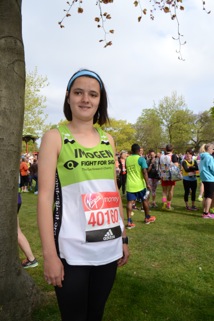
Walking up to the start area with thousands of others taking part in the UK’s most famous marathon, the nerves really began to kick in again. There was a point where my mum and uncle, who came with me, had to leave me as the areas were prohibited for non participants. I walked around alone, soaking up the atmosphere, queuing for half an hour for a portaloo before frantically trying to find my allocated start zone. There were several zones and tens of thousands of runners, so it was quite confusing! Someone nicely questioned whether I was looking at the other runners’ numbers to see where to go as he must have caught me glimpsing at every runner’s number I passed, peering worriedly and discreetly following them to start zone 9 at the red start!
I think my nerves really show on this official photo just before I went to the start line!
On the start line, I began to reflect about everyone supporting me back home. All the messages, advice, donations and encouragement I had received throughout my entire marathon journey to get to this point. I thought how privileged I was to even be on the start line, given that it’s very hard to get a place in this marathon to start with and I’d somehow got one first time I applied at the young age of 18, albeit a charity place but even then it’s tricky to get! I took a moment to look around at the incredible atmosphere as everyone was walking slowly to the start, discarding bin liners that they used to keep warm to the side of the road. I went over my race goals in my head, which primarily were to enjoy the whole experience, start strong and finish strong.
This is a massive, crowded race with about 40,000 people and three starting areas, so it took me 25 minutes to actually cross the start line. I decided I wanted to start how I wanted to finish, with a smile on my face. So, after a few deep breaths I got ready for one of the best (and most painful) days of my life.
In the first mile I felt comfortable and strong as I found my pace, ensuring I was slow and steady as I knew it would be far too easy to get carried away in the moment. Runners were passing me on the left and right, eager to get going. I stuck to my plan and conserved my energy by not trying to constantly overtake the thousands of others around me. After all, I was in this for the long haul! A few miles in, runners converge from the blue and green start areas. Looking ahead, I saw thousands pounding the streets, each with their own unique reason to run, lining the roads of England’s capital. It was a brilliant and inspiring sight.
At mile 3, I grabbed a water bottle and took a few sips before discarding it to the side of the road, being cautious of other runners and bottles. Someone behind me slipped over as it was so slippy and hazardous, so I quickly learnt that water stations were danger points and to take extra care around them.
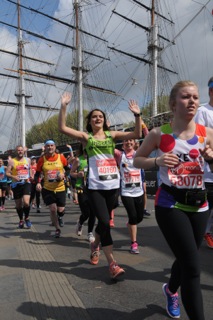
Throughout the race, I passed crowds on both sides of the road, cheering everyone on. At mile 4 a couple of lads offered me some beer, but I declined! Strangers were shouting my name everywhere from start to finish, through the highs and the lows. Live bands were playing, people were offering food and making a day of it having a glass of wine, I high fived lots of excited children. It was like one big party for runners and spectators alike. A high point was Cutty Sark at 10K. Alongside thousands of people cheering, there was a BBC camera. I didn’t care what I looked like and enthusiastically started to wave madly, probably looking like a complete lunatic. To my relief I found that most other runners were doing the same!
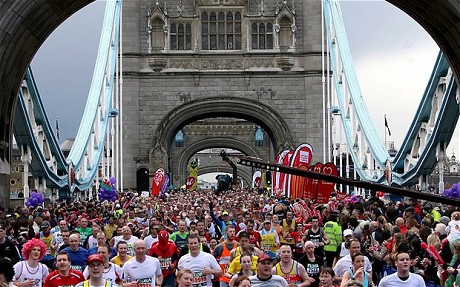
The sensation you get when you turn the corner at mile 12 and suddenly there is Tower Bridge is magical and something I can’t quite describe. It took my breath away and I started to sob. My emotions were all over the place; this was the highlight of the course for the majority. Ahead I could see the bridge packed with thousands of supporters on each side, with BBC cameras to the side of the road. The noise was immense!
Across the bridge, the mile 13 marker loomed into view. I knew this was where one of the Fight for Sight cheer points would be, and alongside my family. I nearly burst into tears as I ran past and I saw them all loudly cheering me on. Finally I reached the halfway mark and ‘Livin’ On A Prayer’ by Bon Jovi was iconically blasting out. 13.1 miles to go!
I was starting to suffer a little at this point. My pace was slowing and by mile 16 my legs were really starting to hurt. I’d ran 20 miles in training without this degree of pain, but something had gone wrong and it was painful now. I did see a couple of runners getting serious first aid from St John’s Ambulance – they had been placed in wheelchairs to get them off the course safely and weren’t looking good. I briefly panicked and went through the anxious thoughts of ‘what if I have to drop out? What if I don’t finish?’ I tried not to panic and dug deep to keep going and calm myself down. Although my pace was now barely jogging through Canary Wharf, I was moving forwards which was the main thing. I don’t think I hit the wall exactly, as my energy felt fine and I was taking a gel every 45 minutes on the dot, but I was struggling. A lot. The crowds ultimately kept me going and made me believe in myself. You cannot underestimate the power of the London crowds – it’s seriously spectacular!
‘Go Imogen!’ ‘Give us a wave Imogen!’ ‘You’re looking great Imogen, keep going!’ was what I kept hearing, through megaphones or just the mouths of kind strangers, shouting my name from all directions as I kept putting one foot in front of the other. I genuinely felt like a celebrity, a famous elite, despite thousands of other runners getting the same attention. It felt like it was all about me. I tried to say thank you to every single person who shouted my name as it genuinely helped me a lot.
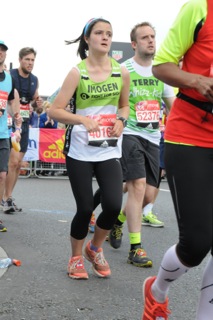
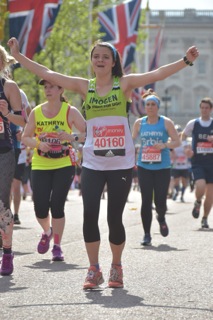
I tried to smile throughout the race, but nevertheless I was still in pain. I think this photo proves it and really sums that up!
As I passed 20 miles I knew I was going beyond my longest training run…the end was in sight. As I tried to push myself to run a bit faster, the 4:45 pacer passed me. Oh no. I was never particularly bothered about the time it would take, but I knew I wanted to be faster than that. My running leader in my club said I could finish in 4:20, maybe sooner. This meant that I was profoundly behind on my target, but no matter how hard I tried I couldn’t overtake, partly due to the enormous crowd of runners, partly because of the intense pain I was now feeling constantly in my legs. So I had to let the time target go and just embrace the last few miles with no pressure.
And on it went, to the Tower of London before going through the tunnel up to Embankment. Mile 22. I was going to do this, I said to myself in my head over and over. It was then that I saw Fight for Sight and my family for the second time, which gave me a massive boost and got me tearing up again! At mile 23, my Mum and Dad were shouting for me at the side of the road along with the bigger and louder crowds along the Embankment. Through tears, for some reason I blurted out to them ‘I’m really struggling now!’ As if they could resolve that!
I could see the Houses of Parliament in the distance a couple of miles later. Then past Big Ben and alongside St James’ Park. I kept willing myself to run from this point to the finish, however slowly it was. I couldn’t walk now – I was so nearly there! My legs had basically given up, every step felt heavy and hurt a lot. But then, Buckingham Palace was soon in sight, and then I turned the corner and saw it…THE FINISH LINE! I’m not ashamed to say that I burst into tears at that moment. I had visualised crossing the finish line on The Mall a lot in training, on almost every long run, which helped tremendously. There it was, suddenly real, right in front of me. I’d previously often imagined what I wanted to do and feel like at this point, having a clear image of myself crossing the line in my head and I replicated it as much as possible. I could no longer hold back my emotions. I threw my hands in the air, with a huge smile on my tear stained face and savoured the moment as I crossed the glorious line in 4:46:24, slower than I would have liked but that didn’t matter to me anymore. I had done it. I’d joined the small population of the 26.2 club, at the minimum age of 18 as well!
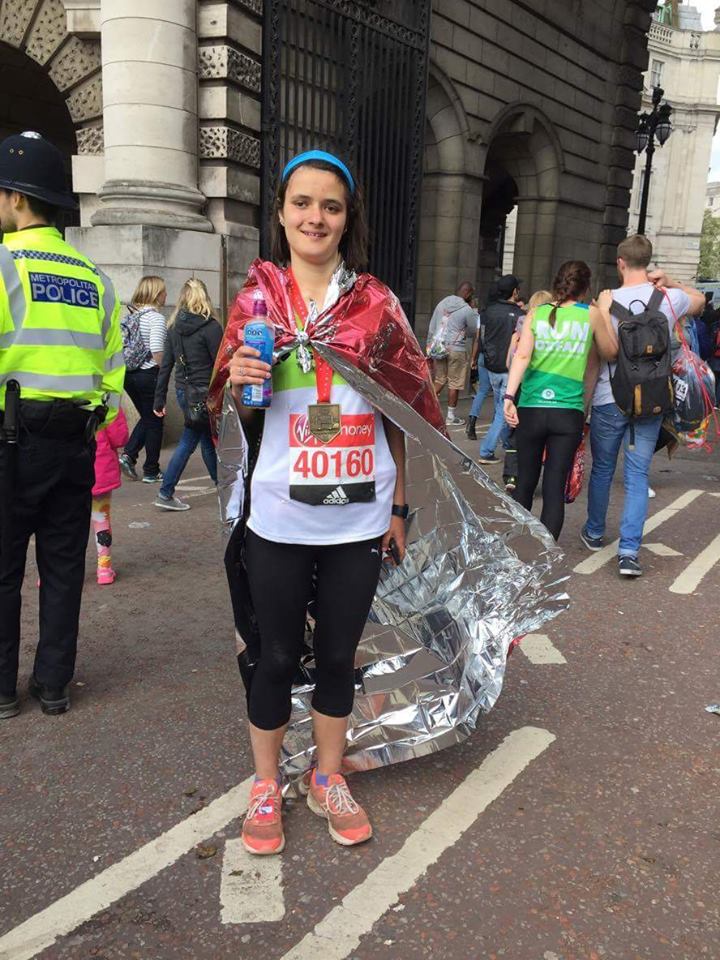
As a volunteer put a medal round my neck, I tried to let it sink in before meeting my family and getting emotional again. I never thought for a second I would be able to run a marathon, even when I said year after year that I would one day. It seemed like an impossible dream that would never come true. Even during those months of tough training, I doubted myself a lot. My self confidence and belief aren’t great, probably partly because of the underestimation I’ve had due to being dyspraxic. As a baby, my parents were told I may never walk or sit up due to my milestones being severely delayed by this lifelong difficulty. At school, I was constantly underestimated. I was rubbish at all sport, inevitably hating it and always being the one that was never picked.
You really do learn a lot about yourself in 26.2 miles. I never knew just how strong I was physically, and especially mentally, until I ran it. It didn’t all go to plan, but I coped with that and adjusted my goals accordingly. People say that if you can run a marathon, you can do anything. The sky’s the limit. With that in mind, I’m going to try to apply my toughness in the marathon training and the race itself to other tough aspects of my life. Surely I can cope with other difficult situations now that I’ve done this!
Something I often get asked nowadays is whether I’d do another marathon, and in truth I don’t have a definite answer to that. Throughout my training I was adamant that this would be my only marathon, I felt so certain of it. Now, I wouldn’t categorically say yes but I also wouldn’t rule it out and say never. The training was the toughest thing I’ve ever put myself through, but the experience was definitely worth it. Who knows if I’ll be pounding the streets of London again in my second marathon one day?
This is an achievement like no other for me. As well as completing the marathon, I have raised over £4,600.00 for Fight for Sight, over double my original target of £2,000, which I was concerned about being able to raise. The support I had in those few months was phenomenal, and I’ll never forget everyone’s kindness and generosity.
I know this whole experience will stay with me forever. Hopefully this will also help put an end to sight loss and will bring forward new, developed treatments and cures for complex eye conditions.
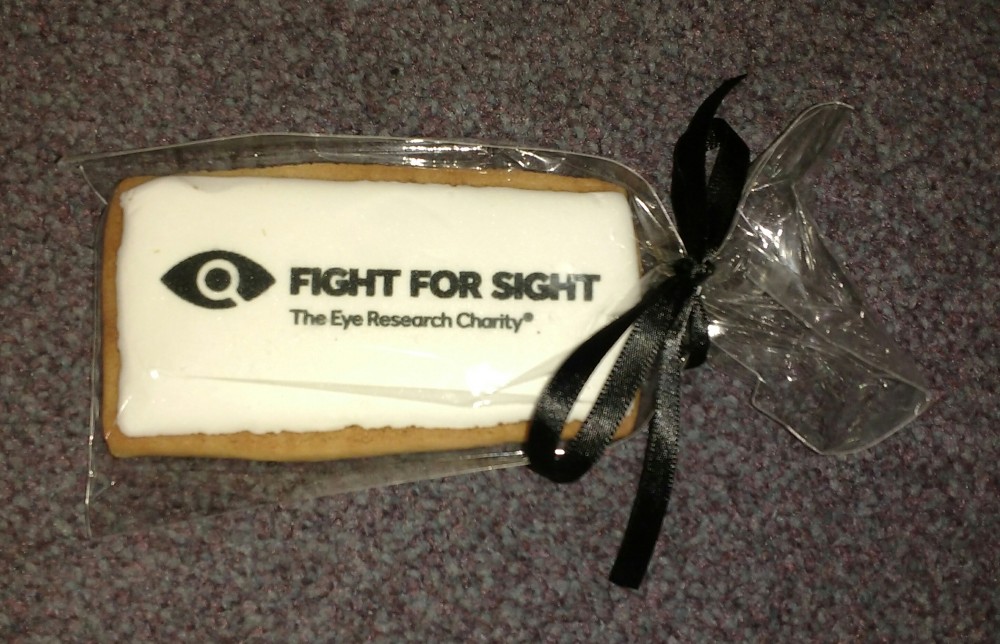
Fight for Sight iced biscuit! I enjoyed meeting Jo and other members of Fight for Sight at the finish
For anyone contemplating a marathon, do it. The journey can seem long and tough, but it’s worth it. It will change your life. You can do it if you put in the hard work, even if you think you can’t. Almost anyone can run a marathon if they put in the effort required. It is such a rewarding experience that you’ll treasure for the rest of your life
The cape of honour!
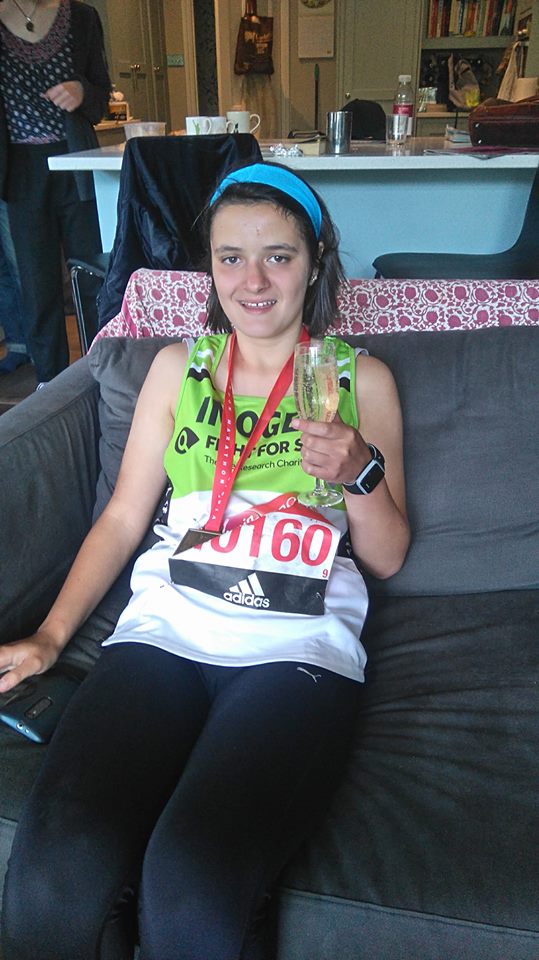
What better way to celebrate than a glass of prosecco?! (I had fully rehydrated beforehand, don’t worry!)




 Imogen’s blog