Living with dyspraxia is a daily challenge that goes beyond the coordination difficulties most people associate it with. One of the hardest struggles I face has to do with my executive functioning – the mental processes that help me plan, organise and get through the day. Even though I try my best to stay on top of everything, I often end up feeling overwhelmed and exhausted.
Getting ready for work in the morning is like running an obstacle course. I wake up knowing there are a hundred things to do, but as soon as I start, my brain feels foggy and slow. Even when I’ve made a checklist, set out my clothes and put everything in place the night before, I still forget things. Sometimes it’s something small, like my bottle of water, but other times it’s something important like my laptop charger or my contact lens solution – something I’ve checked off mentally but still managed to leave behind.
My checklist for work that I physically tick off before I leave the house – despite this, I more often than not forget something!
It’s beyond frustrating. I put in all this effort to plan, but my brain just doesn’t seem to cooperate. When I do forget something, I feel like I’m constantly playing catch-up, and it sets the tone for a day where everything feels harder than it should be. What’s even worse is when I manage to remember everything on my list, yet still end up missing something crucial. It’s exhausting – both mentally and physically – before my day has even properly started.
Executive Functioning in Dyspraxia: What’s Going On?
Executive functioning refers to the mental skills that allow us to plan, organise, remember and manage our time. For someone like me with dyspraxia, these tasks often feel overwhelming. It’s not just that I forget things; it’s the constant mental strain of trying to keep track of everything while knowing something might slip through the cracks.
Planning ahead takes so much more energy. Things that should be straightforward, like organising my day, require a lot of mental effort. Having to check through my bag several times before I leave the house is time consuming and takes energy. And even with all that effort, I still forget key details or get sidetracked by something unexpected. It’s like trying to keep a hundred tabs open in my mind, but no matter how hard I try, one of them is always freezing.
The Fatigue Factor: Why Dyspraxia is So Exhausting
The mental and physical effort required to manage all these challenges takes its toll. A dyspraxic brain has to work at least 10x harder than a non-dyspraxic brain in daily tasks and almost everything they execute. I don’t just feel tired from doing things; I feel drained from the cognitive load. Every task takes more energy because I have to actively think through each step. There’s no autopilot for me. The constant effort to stay on top of everything means I’m mentally exhausted before noon.
And it’s not just mornings; this happens all day. Whether it’s remembering deadlines at work or keeping track of personal commitments, the mental fatigue builds up until I’m completely wiped out. I need frequent breaks just to catch my breath mentally.
Sometimes, I feel like a fraud for even mentioning these difficulties. I know people who have more visible or serious conditions; whether it’s chronic fatigue, Long COVID or other disabilities – that impact their lives in profound ways. In comparison, my struggles with dyspraxia feel small. I find myself wondering if I should just push through, or if my exhaustion is really valid when there are people facing far bigger challenges.
But I’ve had to remind myself that dyspraxia is a hidden disability. Just because others don’t see the mental and physical effort it takes for me to get through the day doesn’t mean it’s not real. The exhaustion, frustration, and cognitive overload are real, and they impact my life in ways that are hard to explain to others. I might not look like I’m struggling on the outside, but the invisible weight of trying to keep up with my own mind can be very heavy.
I’m currently in the process of trying to negotiate greater flexibility with working from home, particularly on an additional day when I feel I need it due to the fatigue and mental strain of managing dyspraxia (as well as my eye condition which causes a whole host of other difficulties.) I’ll be speaking with occupational health soon to explore this and other possible adjustments that could make my work routine more manageable.
If anyone has any tips or strategies to aid short-term memory or improve executive functioning, or any adjustments they have from their workplace which have been helpful in managing this difficulty, I’d love to hear them – any advice would be greatly appreciated!
I made this Venn Diagram detailing some similarities and differences
‘The first thing I think when I wake up is: am I going to be able to speak today?’ ~ Chris Kamara
This poignant quote, from Chris Kamara’s documentary Lost for Words, encapsulates the profound difference between acquired apraxia of speech and acquired verbal dyspraxia; the quote highlights the unpredictability and distress experienced by individuals with acquired apraxia of speech. In contrast, as someone who has always been living with a diagnosis of verbal dyspraxia, my speech has developed over time, providing a sense of stability and continuity where I don’t have to worry about being able to physically talk every day; albeit the lack of confidence and anxiety that often prevents me from being able to converse effectively, I always know I have the fundamental ability to speak now.
Recently, there has been some confusion on social media regarding apraxia of speech and developmental verbal dyspraxia, with many people conflating the two conditions to be the same thing. This misconception is not only damaging but also deeply frustrating as an individual with the latter, as it detracts from the clarity needed to understand the distinct challenges associated with each condition.
Understanding the intricacies of Apraxia of Speech and Developmental Verbal Dyspraxia is essential for both accurate diagnosis and effective intervention. These two conditions, though related, present distinct challenges and require different therapeutic approaches. Apraxia of speech (AOS), often referred to as acquired apraxia of speech, typically arises in adulthood following brain injury or illness, such as a stroke or traumatic brain injury.
In contrast, Developmental Verbal Dyspraxia, now frustratingly known as childhood apraxia of speech (CAS), manifests from early childhood and is not linked to a specific brain injury. Delving into the nuances of these conditions reveals the profound impact they have on individuals’ lives and highlights the importance of tailored support and intervention.
Acquired apraxia of speech occurs when a previously healthy brain suffers damage, disrupting the neural pathways that coordinate the movements necessary for speech production. This condition is characterised by difficulty in planning and executing the precise movements of the lips, tongue, and vocal chords, despite the absence of muscle weakness or paralysis. Adults with acquired apraxia often retain their cognitive abilities and language comprehension, making the sudden loss of expressive speech particularly distressing. They may struggle with articulating words correctly, exhibit inconsistent speech errors, and find it challenging to string together syllables in a smooth, coordinated manner. This abrupt change can lead to significant emotional and psychological challenges, as individuals grapple with the frustration and isolation that accompany the inability to communicate effectively.
Contrasting with Apraxia of Speech, Developmental Verbal Dyspraxia is present from early childhood and so affects language comprehension, causing a delay with processing verbal language and short term memory. This means it affects the overall trajectory of life a lot more than apraxia of speech. As a child, I faced persistent difficulties in forming and sequencing the sounds needed for speech. Unlike my peers, who developed speech abilities naturally over time, I had to contend with inconsistent sound errors, difficulties with longer words or phrases, and a pronounced gap between my receptive language abilities and my expressive speech skills. For me, the world of verbal communication was a constant struggle, requiring significant effort and repetition to achieve what comes naturally to others. The early and ongoing intervention in childhood is crucial, involving specialised speech therapy techniques designed to build and strengthen the neural pathways required for speech production.
The experiences of growing up with Developmental Verbal Dyspraxia versus acquiring Apraxia of Speech in adulthood are markedly different. I face a lifelong journey of navigating a world where verbal communication is inherently challenging. I still encounter difficulties in social interactions and daily activities involving speaking to people, often requiring sustained support and accommodations. The frustration of not being able to express myself verbally from an early age has significantly impacted my self-esteem, self confidence and social development. However, with early diagnosis and consistent, targeted therapy, I made significant progress, learning strategies to improve my speech clarity and communication skills over time.
On the other hand, adults with acquired apraxia of speech experience a sudden and often devastating loss of their ability to speak. This loss can be particularly traumatic, as it strips them of a fundamental aspect of their identity and independence. The transition from fluent speech to struggling with basic articulation can lead to feelings of helplessness, depression, and social withdrawal. Rehabilitation for acquired apraxia typically involves intensive speech therapy, focusing on relearning how to plan and execute speech movements. This process can be arduous, requiring significant mental and emotional resilience as individuals work to regain their communicative abilities.
Both conditions share similar characteristics and interventions, such as necessitating specialised speech therapy, but the approaches differ based on the individual’s needs. For children with Verbal Dyspraxia, therapy often involves play based activities, motor learning principles, and repetitive practice to encourage the development of neural pathways for speech. For adults with acquired apraxia, therapy may focus on re-establishing motor planning skills, using other techniques and evidence based practices.
Distinguishing between Acquired Apraxia of Speech and Developmental Verbal Dyspraxia is crucial for several reasons. Firstly, accurate diagnosis directly impacts individual outcomes. With a clear understanding of the specific condition, speech therapists can tailor treatment plans to address the unique challenges faced by each individual. When these conditions are confused or inaccurately represented, it can lead to inappropriate or ineffective treatment strategies.
Furthermore, a lack of clear distinction can contribute to misunderstanding and misinformation among patients, families, and healthcare providers. This misunderstanding can also affect the emotional and psychological wellbeing of individuals with these conditions; since the documentary I unfortunately have felt more misunderstood than ever as I saw they were misrepresented as the same thing.
Additionally, a misleading portrayal can hinder empowerment and self-advocacy. Accurate and specific information is crucial for individuals to seek out the appropriate resources, support groups, and therapeutic interventions. When conditions are conflated, it becomes challenging for individuals to identify with a community or to find relevant and effective strategies for managing their condition. This confusion can lead to isolation and decreased confidence in navigating their speech challenges.
Unfortunately, there has been additional confusion due to conflicting terminology. In America, ‘apraxia of speech’ tends to refer to Verbal Dyspraxia, not Acquired Apraxia of Speech, which further complicates understanding and, as I have seen, causes a lot of confusion on social media. This inconsistency in terminology underscores the need for clear and accurate communication about these conditions to ensure that individuals receive the correct diagnosis and treatment, and that awareness efforts do not inadvertently perpetuate misunderstanding.
Chris Kamara’s work to raise awareness of speech conditions is commendable and I admire his efforts to the cause. Though, in my opinion, his documentary was an inaccurate portrayal and confused the two conditions.
Imagine waking up every single morning and having to face your biggest fear just to lead your normal every day life. Your heart beats faster, you get sweaty palms and you can feel butterflies in your stomach every time you walk into the office. This fear isn’t life threatening; in fact, it is something that most people do naturally without a single thought or care in the world required. This fear is speaking to people.
For me and other individuals who live with verbal dyspraxia, a neurological speech disorder, talking to people can be a very real fear. Will they be able to understand my speech? Will I find the words I need to say, and express myself as eloquently as I have rehearsed it in my head? Will I look stupid? Will I be able to say exactly what is on my mind?
Going through life not talking to people isn’t really an option, so this often overwhelming fear has to be faced every time I leave the house. Thankfully the older I have got and the more experiences I have had at having to converse with different people, the easier it has got and the better I have become at it, but the fear is still there, lurking, like a persistent fog enveloping every thought and action, obscuring clarity and casting a perpetual chill over the mind. One snide comment, look or mistake on my part can make me doubt myself and feel a great sense of inadequacy. Regardless of the social experiences I will have throughout my working life, being able to speak to people in the capacity and extent to what I would like and need to be able to do will always be a barrier to some degree, as it is a lifelong disability.
As I write this, I am reminded of the countless moments in my life where my speech and language difficulties have presented challenges, especially in the workplace. Being an adult with a hidden disability, I often find myself grappling with processing speed and difficulty engaging in conversations, despite my genuine desire to be sociable. My journey has been fraught with misconceptions, extreme social anxiety, and the continuous effort to navigate the professional world while staying true to myself.
From a young age, I’ve struggled with articulation and processing speed. While colleagues effortlessly string together words in conversation, I find myself carefully crafting each sentence in my mind before it leaves my lips. This often leads to delays in communication and an inevitable sense of frustration, both for myself and those around me. In the workplace, these challenges manifest in various ways. Simple tasks such as answering phone calls or participating in meetings can become daunting hurdles to face. Unexpected occurrences where I am expected to speak to someone spontaneously about a case can be a real hurdle as I haven’t had the time to problem solve and think about exactly what it is I need to say. The pressure to respond spontaneously to enquiries while articulating my thoughts coherently can feel overwhelming and unattainable. There have been moments when I’ve either hesitated to speak up in meetings or general conversations for fear of judgment or misunderstanding from my colleagues, or I simply haven’t had enough time to formulate the words in my mind before the discussion moves on to another topic, which can feel soul destroying.
Me in a nutshell
Adding to the complexity is the misconception that my quietness equates to disinterest or lack of competence. I have lost count of the times people have mistaken my reserved demeanour for aloofness or indifference. The truth is, behind my quiet exterior lies a strong desire to connect and contribute, albeit in a way that aligns with my communication style. It is incredibly frustrating to long to contribute and add something to a conversation, always bursting with things to say but to not have the confidence nor the verbal processing time to be able to join in; sadly, this is what I experience every day. It is a major achievement for me when I manage to chip in and add a comment to a conversation, or to even initiate one with a colleague.
Though thankfully no one has said anything at my present workplace, in previous employment and other situations my communication difficulties have often been mistaken for autism. While both conditions share overlapping traits and involve challenges socially, the key distinction lies in their underlying mechanisms. Autism primarily manifests as a social communication disorder, affecting a person’s ability to interpret and respond to social cues effectively. In contrast, verbal dyspraxia primarily affects speech and language production and ability to process verbal information quickly, stemming from difficulties in planning and coordinating the movements required for speech. Thus, while individuals with verbal dyspraxia may struggle with speech clarity and articulation, their social communication skills are typically more intact compared to those with autism. Understanding these nuanced differences is crucial in supporting someone at work.
Social anxiety often exacerbates my challenges, amplifying the fear of judgment and rejection in social settings. While I yearn for meaningful connections and camaraderie with my coworkers, the fear of stumbling over words or being misunderstood looms large, due to the trauma of my speech being unintelligible for years when I was a child. As a result, I sometimes retreat into solitude, seeking solace in the familiarity of my own thoughts rather than braving the uncertainties of social interaction.
Despite the assumptions of colleagues, my quiet demeanour doesn’t define the entirety of who I am. Although I know my colleagues are well meaning and do not intend to upset me, their surprise at discovering my enjoyment of going out for a drink, an evening out with friends and my like for a Guinness, illustrates their narrow perception. Comments such as ‘you’re the quietest person in the office, I wouldn’t expect that from you!’ are nothing short of maddening. My speech and language difficulties, combined with social anxiety, are only a small fraction of me in a slither of time; within an anxiety provoking situation with people who don’t know me well, my difficulties constrain me from fully expressing myself. Beneath the surface, there’s a vibrant individual with diverse interests waiting to be unveiled. It is disheartening to feel misunderstood, as I yearn for my colleagues to witness the richness of my personality beyond the confines of my introverted exterior. I have a lot to add to the frequent discussions of CCFC, for instance. I am also a long distance runner, a nature lover, a pedigree cat owner, a neurodivergent advocate and a whole lot more. I have a group of friends I like socialising with, a family I can chat away to, a boyfriend who I like having a pint with. There is always more to someone than meets the eye.
As someone who’s naturally quiet and faces challenges due to a life impacting speaking difficulty, receiving feedback from my manager about requiring me to ask more questions and speaking up when unsure is true but tough. It’s not that I don’t want to participate, but my social anxiety, compounded by my speech and language difficulty, makes it incredibly challenging. Recently, I have got more confident at asking certain colleagues for clarification when unsure about something, but it is still a barrier. I believe workplaces in general should be flexible and accommodating to different working styles and individual needs. Advocating for adjustments that support my communication challenges, such as the ability to contribute feedback via email and giving me more time to think about my views before expecting a response while still allowing me to fulfill my responsibilities, could foster a more inclusive and supportive work environment for me.
It is not uncommon for individuals with speech and language difficulties to experience the distressing phenomenon of colleagues discussing them as if they are invisible, even when they are sitting right there, and this has happened to me several times across various workplaces. This can manifest in conversations where coworkers deliberate over whether to assign tasks or enquire about completed work, all while the individual is present. Such instances can evoke feelings of being overlooked, undervalued, and marginalised. For someone already grappling with speech and language challenges and the accompanying social anxiety as a result of my difficulty, these moments can exacerbate existing insecurities, leaving me feeling diminished and disconnected from my peers. The impact of these experiences underscores the importance of fostering an inclusive workplace culture where all voices are heard and respected, regardless of communication abilities.
Despite these obstacles, I refuse to let my hidden disability define me or dictate my professional life. Instead, I’ve learned to embrace my differences and advocate for accommodations that allow me to thrive in the workplace. Whether it is requesting additional time to process information or utilising written communication as a supplement to verbal dialogue, I’ve found ways to adapt and excel in my role. Moreover, I’ve come to realise that my unique perspective and communication style offer invaluable contributions to the workplace. While others may excel in verbal eloquence, I bring a depth of introspection and thoughtfulness that enriches team dynamics and problem-solving processes. My ability to super focus means that I can diligently get tasks done to a high standard, as I am completely absorbed in the task at hand once I am familiar with the process. I can easily block out any other distractions around me and completely engage to the extent that I sometimes don’t hear people sitting in close proximity to me and they have to repeat something! By embracing diversity in all its forms and recognising the powerful qualities the quieter colleagues bring to a team, organisations can harness the collective strengths of their employees and foster a culture of inclusivity and acceptance.
The benefits of being quiet and how managers can cultivate and empower quiet talent
Living with a severe neurological speech disorder does not impact on my intelligence. It also does NOT mean that I have nothing to say. All it means is that I struggle to get the thoughts and ideas in my head out verbally.
Beyond my quiet exterior, I have lots of things to say. Please give me a little time, patience and understanding, and slowly more of my personality will show.
A brilliant article that I relate to completely: ‘5 things I wish employers knew about dyspraxia’:
Stepping into the bustling conference at Norton Rose Fulbright in June 2018, a global law firm in central London, was daunting. I felt a surge of anticipation mixed with a tinge of nervousness, as it was not only my first time attending a national conference and networking with other delegates, but it also marked a poignant moment of embracing my difficulties. Little did I know, but it would be a moment that would change my life forever. As I navigated through the sea of attendees at different talks and groups, I couldn’t help but marvel at the sense of unity that filled the air. Whether it was workshops on coping strategies, employment support or education, the charity empowered me to take control of my life and pursue my goals. It gave me the tools I needed to navigate the world with confidence and resilience from that day onwards, which was incredibly liberating.
Little did I know, over the course of that day and many months and years later, I would experience a transformation that would shape the trajectory of my journey with dyspraxia and leave an indelible mark on my soul.
As I write this very unexpected and rushed blog post, just an hour or so after hearing the announcement via email and social media, a heavy feeling settles in my chest as I don’t quite know where to begin but concurrently I feel the need to express how I feel. It is a mixture of sadness, nostalgia, and gratitude. The shocking news of The Dyspraxia Foundation closing its doors has hit me hard. For years, this charity has been more than just an organisation; it has been a lifeline, a sanctuary, and a beacon of hope for me and countless others navigating life with dyspraxia, in some very dark moments.
One of the most profound aspects of my journey with The Dyspraxia Foundation has been the sense of belonging it provided. In a world where I have often been misunderstood and underestimated, and regularly felt out of place like a misfit on the margins of society, this community has welcomed me with open arms. Through the online facebook support group in my early twenties, and many more social events that followed that first conference, I found others who shared similar experiences and understood the challenges I faced, accepting me for who I was. It was the only place where I didn’t have to explain myself because everyone just got it.
Being part of The Dyspraxia Foundation wasn’t just about finding people who understood me; it was about finding my tribe. These were individuals who didn’t see my differences as weaknesses but as strengths. Together, we celebrated our victories, big and small, and lifted each other up during tough times. It was a space free from judgement where I could be unapologetically myself. I found solidarity; a unity I had never experienced before.
As a voluntary joint Local Coordinator for the West Midlands regional group, I found myself thrust into a role that demanded leadership, empathy, and resilience. Serving as a bridge between the organisation and the local dyspraxia community, I took on the joint responsibility of organising support groups, events, and workshops aimed at providing resources and fostering a sense of belonging for individuals and their families like myself and mine. In this role, I discovered a newfound confidence in my ability to make a tangible difference in the lives of others. The trust placed in me by both the charity and the community empowered me to step outside of my comfort zone by talking to a range of individuals and public speaking, take initiative, and advocate for the needs of those who often felt overlooked or misunderstood.
Similarly, my role as one of the first of three national Youth Champions provided me with a platform to amplify the voices of young people living with dyspraxia. As part of a team dedicated to addressing the unique challenges faced by young people, I had the opportunity to collaborate on initiatives aimed at improving social inclusion and life outcomes for individuals with dyspraxia. Being entrusted with this responsibility not only deepened my understanding of advocacy and activism but also instilled in me a sense of purpose and determination to effect positive change.
Through both of these roles, I developed invaluable skills in communication, organisation, and advocacy that transcended beyond the confines of the charity. The confidence gained from leading and representing the dyspraxic community extended into various aspects of my life, from academic pursuits at university to personal relationships. I learned to embrace my strengths, confront my weaknesses, and navigate challenges with resilience.
Moreover, the relationships forged and experiences gained through my involvement with The Dyspraxia Foundation has enriched my life in ways I could have never have imagined. Lifelong friendships have been created, meaning trips out and holidays with friends gained. Parents have told me I have given them hope, which instilled in me a sense of purpose and meaning. In essence, my roles as a voluntary local coordinator and youth representative not only empowered me to make a difference in the lives of others but also transformed me into a more confident, compassionate, and resilient individual.
There is a stark realisation that now sets our community apart from others; there is no longer a national charity solely dedicated to dyspraxia. Unlike other neurodivergent conditions that have prominent organisations with strong voices championing their cause, dyspraxia now once again lacks a unified voice on the national front. Without a dedicated national charity, the resources, support networks, and advocacy efforts that had been instrumental in empowering individuals like myself are suddenly at risk of being lost. The absence of a centralised organisation means that awareness raising, providing support, and driving change falls largely on the shoulders of local communities and individuals.
My thoughts are with those who have lost their jobs, all those involved in the charity in whatever capacity and to every other individual like myself who regarded the foundation as a big and important part of their life.
Being dyspraxic means that daily functions and activities don’t come as naturally to us. Coping with an increased mental effort to focus and sustain a task, having to cope in a specific social situation and understanding what others are expecting of you, decoding information you can’t quite understand or carrying out a motor task that has not been automated means greater effort is required for all of these events. It takes us 10x the amount of effort to do things than neurotypical individuals. Constant thought and consideration goes into how we carry out certain tasks which come naturally to others. In my individual experience with verbal dyspraxia, this is mainly with processing conversations, questions and formulating what I want to say.
While studying, it is also either about trying to concentrate (when it’s a topic I dislike it’s difficult to muster the motivation and I can get more easily distracted by other things on my laptop!) or forcing myself to take breaks when needed so I don’t experience burnout, which is another common occurrence with neurodivergent brains. Our brain always has to work harder to do things, which makes us get tired more easily and quickly than other people, even when we haven’t necessarily done more than someone else or been particularly busy.
A recent poll result that found the greatest barrier to engagement in the workplace amongst neurodivergent respondents is fatigue, followed by communication
The challenge of fatigue and being a student
The pressures and demands of studying for a degree at university can be tiring and draining at times to some extent for everyone, though because it takes me longer and more effort to participate in lectures and to grasp the theories effectively, coupled with requiring and always having to consider the executive functioning skills to stay organised and on top of things unlike other students, I find that I often arrive home feeling absolutely exhausted! This is while other members of my family are still working (full time); in recent times, I have really recognised that I get burnt out, overwhelmed and tired more easily and quickly than them because of how much harder I have to work.
Frustratingly, I often free my afternoons for study time either in the library or when I get home, but needless to say, my brain is too tired to concentrate by the time I get back. To help with this, I usually like to break up my day by stopping somewhere for a walk or a run on the way back, which can boost my energy and brain power so by the time I get back I can get another hour of studying in. I also tend to use a version of the pomodoro technique, although I adapt the timings of this to suit my individual study style.
My course is unlike other universities in that it has a stable structure of four mornings a week and one day studying from home. Being neurodivergent, I have found this very accessible and an incredibly good routine and balance for me. I tend to be productive on Wednesdays (my day at home) and am able to get more done when I’ve had a lie in, don’t have to go anywhere and feel refreshed! I think hybrid working would really suit me if I could find a flexible job in the future, as a blend of in-person teaching and home working has been ideal for me.
Scheduling in some set, non negotiable ‘me time’ at certain points in the week really helps to recharge my batteries and is also useful for maintaining a routine as well. For instance, most Tuesday evenings are reserved for my ‘pamper night’ with a face pack, foot spa, weighted blanket, weighted eye mask and whatever else I happen to have lurking in my designated pamper drawer! I also often prefer to be alone in the evenings during the working week, as I’ve had too much ‘people time’ during the day and feel like I need to rest and process the day!
Getting a balance and having boundaries
From September, I took on the role of Welfare & Inclusion Rep at university. This is in addition to the demands of third year, having higher word counts on assignment briefs and also trying to navigate the scary realisation that my time as an undergraduate student is coming to an end and trying to figure out what on earth I’m going to do in September!
Essentially, this role is about promoting mental health and wellbeing amongst students, and ensuring every student no matter their background or circumstance can achieve, therefore championing equality, diversity and inclusion. Amongst a team of Reps working within a different area, we plan, organise and host a number of free events for students around campus, liaise with the Students’ Union, Senior Course Reps and campus executives, and lead on campaigns.
So far, I have found this role rewarding but demanding. Numerous meetings and commitments take up my diary every week in addition to my lectures. Individual 1:1 meetings tend to require more input from me, and each meeting I go to requires careful planning of what I want to express beforehand due to the nature of my difficulty, which inevitably uses up my energy more. Group meetings can also be a challenge because I need more time to process and think about something before I answer, so I tend to agree/go with what the majority think on certain decisions that need to be made within a certain timeframe, and then sometimes can have different thoughts on something specific afterwards that I wish I’d thought of earlier! Various events I help to plan and organise happen every week, which I am expected to partake in. Socialising with different students I don’t know well or haven’t met before is difficult for me, although playing Uno has been helpful in starting conversations!
However, I know I’m not expected and don’t have the capacity to attend all of them. Studying for my degree remains my biggest priority of this year, so I’m increasingly learning to be selective and say no to certain events.
This year I have been a lot better at getting a life/work/study balance, and not overworking myself to burnout whilst still maintaining my hard work ethic. Increasingly I recognise the value and importance of scheduling time out and looking after myself, although I am still a perfectionist. Due to being acutely aware of taking longer to comprehend certain topics, I tend to overcompensate and actually finish an assignment a lot earlier than everyone else, which isn’t helpful either!
Next week I am required to attend a networking ‘Winter Mixer’ event in the evening which involves giving a mini presentation about what I do, introducing myself and socialising with a range of others involved with the university. Not easy for me to do! So I have decided to study from home during the day (as there is an online meeting I need to attend that clashes with my lecture anyway.) Making adjustments like this can sometimes be a good idea so I’m not overloading myself – either having to stay the entire day in Coventry or go home and come back later (which involves additional petrol/car parking costs) would definitely be overloading myself!
Even when I logistically can turn up to an event that’s happening at university, sometimes I just feel like I don’t have the mental/physical capacity or energy to do it after a four hour lecture as well, where I’ve likely had to contribute some of my thoughts and thus used some of my mental energy for the day. On these occasions, I have learned to say ‘no’ and apologise that I can’t make it because I’m ‘busy.’ (This goes for commitments/plans I make outside of university as well, sometimes I just don’t have the energy to be sociable.) Currently, I don’t have the confidence to say it’s because I need time to recharge or don’t have the energy, as many people won’t understand neurodivergent fatigue and how it differs to normal levels of tiredness. I hope I will one day feel able to be honest with people and explain it more to them! That said, I have been going to the majority of events I am involved in and have generally got back from university later this year compared to last year – which then requires me to recuperate more at home!
The spoon theory
The spoon theory is a metaphor which explains how much energy someone has in a visual way to encourage a self-pacing strategy. Through determining how many ‘spoons’ I have throughout the day and checking in with myself at regular points, I can decide what I can participate in and what to say no to.
When we wake up, most neurotypical people have an endless supply of spoons. With neurodivergent brains, we have more of a limited number of spoons, which causes the need for us to be meticulous about the choices we make depending on the amount of energy (spoons) we have on any given day, with different activities/commitments requiring a different number of spoons. It can be applicable and a useful analogy for everyone to recognise what they need and what areas to spend their energy on i.e. if you don’t sleep well one night, you’ll wake up with fewer spoons the next day. Fewer spoons means you can’t access as much energy.
The inconsistency in my energy levels can be a source of frustration for me, and I imagine could be interpreted as lazy or selfish due to having a ‘spikey spoon drawer.’ For instance, I almost always have the energy for a nice walk in nature as this really recharges me. On the other hand, I don’t always have the mental energy to attend a social event or meeting, or even contribute my ideas or findings in a lecture even when I have something to share, which could be deemed as unsociable and selective in what I choose to do. The number of spoons in specific areas can differ i.e. executive functioning, sensory, social etc. Having the knowledge of this is helpful so I can plan what I can do accordingly.
I will often use my awareness of my various spoons to motivate myself. For example, when I’ve agreed to cook the meal or I’ve committed myself to doing some cleaning, and then find that they require a high level of spoons on that day which I feel I’m lacking, I often pair that activity with something that recharges my energy (which is most often listening to my favourite upbeat music – a sure way to increase my motivation, energy and get me dancing round the kitchen!)
Sleep
To replenish the stock of spoons for the next day, a good quality and quantity of sleep is required. Unfortunately, people with dyspraxia also frequently report difficulties with sleeping, and this has remained a long-term issue for me, although instances of poor sleep now is less common than when I was younger. I find I need more sleep than neurotypical people, but it can also take me longer to fall asleep at night due to my brain being wide awake and constantly full of racing thoughts and worries – having an overactive brain is hard! Dyspraxia is known to be associated with anxiety disorders and mood disorders, and fatigue is known to be a factor in mental health issues. What is also complex is the intersection between the effort required, anxiety, depression, and fatigue. For some, the mental health conditions are not just co-occurring with neurodiversity but may be caused in some way by neurodiversity or by the challenges of navigating the world as a neurodiverse person.
In short, being a neurodivergent person in a neurotypical world can be exhausting because it takes us longer to do the things others sometimes take for granted. Life can be more overwhelming and complex for us to navigate, requiring more thought and therefore draining our energy more easily/quickly than others.
Developmental coordination difficulties are thought to affect 5-10% of the population, which presents a barrier when participating in physical activity. Being less physically fit means dyspraxic people are at disproportionately greater risk of obesity and weight gain, which increases the likelihood of other health issues. There is definitely a correlation between being dyspraxic and less physically active.
The majority of dyspraxic people will hate PE at school and I was no exception, endlessly missing the ball in rounders and being unable to score a goal in any team ball game. I couldn’t even hold the bat or racket properly and had no control of the ball in hockey or javelin. If you got placed in the ‘mixed group’ you knew you were rubbish, it was the ultimate humiliation…no prizes for guessing where I ended up! No one wanted me on their team or in their group for dance or athletics, and I don’t blame them. I imagine school may put a lot of dyspraxic people off sports and exercising in general and I can completely see why! Here are some of the reasons dyspraxic people commonly cite for being inactive or finding it difficult to participate in physical activity:
I think gyms should be more inclusive in the types of activities they run and making the physical environment more accessible to reduce many of these barriers for neurodivergent individuals. Nevertheless, there are many alternative sports and exercise to try besides the team games you are made to participate in and learn to loathe at school, and going to an overwhelming gym, and these can be enjoyable. Parents can also doubt their child’s ability and be hesitant to let them have a go at different activities due to their poor coordination or balance, but in my opinion these sorts of sports are exactly what the child needs to do to lessen their difficulties over time!
Here are some sports and exercise I have enjoyed over the years besides the regular running I do now (which I will talk about more in another blog post at a later date):
Horse riding
Being an individual sport, the good thing about horse riding is you only have to focus on yourself and the horse you are riding, which can minimise some of the barriers we might have with coordination and fast movement. It also means that you know you aren’t being judged by anyone else, as everyone is so busy focusing on themselves and what their horse is doing to notice if you do something wrong!
There was a time where I went horse riding every Saturday with my sister. There were a few stables we tried over a number of years, and I thoroughly enjoyed it. Horse riding is good for balance, posture, rhythm and strength, while also developing my processing skills and following instructions in order as the leader told you when to trot, canter, stop the horse etc. Although I had poor strength and coordination during this time, I never once fell off which is quite an achievement for someone who is dyspraxic – I’m guessing because I had to concentrate so much harder than others at not falling off! Sometimes, we went across the fields in the adjourning countryside rather than the paddock which was always fun.
I had several birthday parties there with friends, and even partook in horse care after the lessons at one point, which involved cleaning out the stables, brushing the horses and making sure they were ready for the next riders. Connections with animals are different to interacting with humans, which was also beneficial to me socially. I could chat away to the horses and formed some close bonds with some of them – notably a Shetland pony called Dido, a brown and white pony called Chico, and a chestnut pony named Cindy that I can recall!
Sometimes, the instructor told us to do exercises while sitting on the horse such as reaching forwards as far as we could or circling round before or after a lesson. Although I sometimes found these exercises difficult, they were fun and involved a lot of focus and concentration, which ultimately helped me to succeed.
Regardless of ability, horse riding seems to be very inclusive and can seem to be enjoyed by anyone. If you are really not confident, there will always be a guide to help hold onto the horse. When I started, I always had someone leading me round, but then I didn’t need a leader and was perfectly happy and competent to be in charge of the horse myself!
Rollerskating/ice skating
For Christmas when I was eleven, I got given some rollerskates that I wanted. I remember being very frustrated as I was unable to use them to begin with, then slowly I started using them aided going up and down the kitchen (while clinging on to my parents/the sides for support!) This progressed to the playground of my local park, where there were more things I could cling onto.
Before long, persistence and determination meant that I was rollerskating round the park by myself unaided. I used to zoom down the hills and go really fast past dog walkers, bicycles and other members of the public using the park. I absolutely loved it! Yes, I did fall over a few times, but I never got seriously hurt or injured.
Similarly, I undertook an ice skating course with my mum and my sister at around a similar age. I was incredibly wobbly and unconfident to begin with, remaining round the edge of the rink. The more I went, the more my confidence grew and soon I was venturing in the middle of the rink. I went ice skating with a friend at the same place recently and it was the same; at the beginning, I was clutching the barriers and clinging on for dear life as I slowly skated round the edge. As the evening progressed, I was able to let go of the sides of the rink and skate round at speed, even to the middle! My neurotypical friend was the one who fell over whilst I maintained my balance throughout and left with no trips or falls. Again, I think this was because I had to focus so much harder and put more conscious effort into staying standing!
Skating is great for balance. I recommend going when there aren’t many people there so there aren’t as many obstacles to navigate, and have someone with you to be your personal handrail while you’re building up confidence!
Trampolining
One of my favourite things from my childhood, I used to spend hours bouncing up and down. As soon as I got back from school, I used to get changed and then head out to the trampoline and not come in until tea time! My siblings and I used to invent all sorts of fun games on the trampoline when we were younger, which brought me so much joy!
Trampolining is great for balance, posture and overall flexibility. I could never do flips, but could do all sorts of back/front drops and I think it really improved my body control and balance overall. My parents always insisted on having a net round the trampoline as a safety precaution in case we fell off as it limits the chances of injury, which I think is a very good idea.
Swimming
Swimming is often said to be the best exercise there is. It uses all your muscles and helps with low tone, bilateral integration and breath control, which is also great for verbal dyspraxia. From when I was quite young I had swimming lessons both with school and as an extra curricular activity after school, as well as additional trips to the local public swimming pool at weekends for fun with family and friends. I wasn’t really a fan of lessons, and always preferred to just have fun and play games in the water!
For some unknown reason (probably to do with my dyspraxia) I have never got the hang of traditional strokes such as butterfly, breaststroke and backstroke that I was repeatedly taught in swimming lessons. Instead, I always doggy paddle in the water! Doggy paddling is simple and perfect for beginners, often being the stroke young children use as they learn. It seems I have never grown out of it! Much to the amusement of my family, I am a very fast and competent swimmer when swimming this way, and can easily overtake them as I race to the other side of the pool. Using the improper technique has never held me back and contributes to me being an efficient and confident swimmer, and that’s the main thing! I would definitely recommend learning to swim however you like, as it is such a useful, important and potentially lifesaving skill to have.
I also love swimming in the sea on holiday. Here I am swimming with my dog in Scotland in 2016 – we both had the same stroke!
Yoga and pilates
Yoga boosts muscle tone and balance and helps with flexibility, while also clearing the mind at the same time. There are several types of yoga which can be a bit confusing and cause some difficulty with knowing which type to pick, and pinpointing the differences between them – I still don’t really know and haven’t exactly discovered which is right for me.
Although I frequently have to be corrected with regards to the direction my arms are heading or my body is facing, or support with getting into a complicated position, I have found yoga to be a nice gentle exercise great for stretching muscles, which is particularly good if you are also a runner like me! Small classes are the most inclusive in my experience – I have found big classes overwhelming and even more mortifying when I have to be corrected. The nice thing about yoga is its non-competitiveness; it isn’t about what others are doing, you just focus on what you can do and there is no pressure to do anything that is too hard or uncomfortable for you. It has taken my mind away from the daily stresses of life and forced me to focus on the present.
Pilates is a more active version of yoga. Though it has been my personal preference over yoga because it is more energetic and cardiovascular focused rather than meditation and relaxing, the class I have been to has been very fast paced! Regardless, of this, I enjoyed these classes and think that the teacher makes a difference in this case. I found it helpful to let them know about dyspraxia and how it might affect me before commencing the exercise, even just for personal reassurance that they know there’s a reason when you get mixed up or confused over the directions of the movements!
Virtual reality and video games
Increasingly, there is emerging and widespread awareness about the benefits of virtual reality and video game exercise to people with motor disabilities. Last autumn I took part in a focus group study conducted at the University of Exeter; they wanted to investigate how virtual reality could be used in assessing, diagnosing and supporting individuals with dyspraxia in the future. This involved receiving an Oculus Quest 2 headset to play with for two weeks followed by a 1:1 unstructured interview to gather qualitative data for the research, which then inspired me to research this very topic more as a proposed university research project!
Beat Saber was a perfect game to try as it involved everything that dyspraxic people struggle with. Left and rights, sequencing and following instructions at a considerable pace without time to process. Needless to say, I was hopeless to begin with and kept instantly failing the levels by mixing up my left and rights! By the time I had to post it back and partake in the interview, however, I was getting the hang of it. Each time I played, I steadily improved my quick processing and ability to discern left and right quickly. Games like Beat Saber and other VR games provide a fun alternative exercise due to its required fast upper body movements needed to slice the coloured blocks, along with moderate side to side leaning. This makes it a very viable option for a cardiovascular workout, as it also really raises your heart rate! Several studies have indicated it being a good fitness regime and effective workout, citing that being able to safely engage in an activity previously inaccessible due to the resulting disability constraints can increase motivation and enjoyment of physical activity.
Beat Saber
When I was a teenager, I got into the Just Dance games on the Nintendo Wii. Similarly, this game is known to improve cardiovascular health, burn calories, build endurance and improve balance. Whilst I cannot contemplate going to an in-person dance class because I’m adamant I would embarrass myself and I have the self knowledge to know I’d be hopeless, this is a more dyspraxic friendly type of dance/zumba as it eliminates the fear of failure or embarrassment because you do it in your own home, in your own way, at your own pace without anyone seeing you. Different difficulty modes made it relatively easy to follow the sequences, and the music really boosted my mood after a tough day of school!
In summary
I am very grateful I was always encouraged to try all these activities in the same way as my neurotypical brother and sister and was never treated differently. My desire to roller-skate or horse ride was never met with any reluctance because I was dyspraxic, because they are undoubtedly exactly what I needed to develop and improve the things that didn’t come naturally to me. These exercises and sports have really helped my coordination and motor skills down the line, as my motor issues are significantly minimal now. Many parents are often afraid and hesitant to let their dyspraxic children partake in ‘risky’ physical activities such as ice skating and horse riding because of their concern about injuries. But really, there is a risk involved in almost everything we do in our daily lives! In order to minimise the effects of dyspraxia, you need to practice what you find difficult to hone and get better at those skills – that is the very nature of dyspraxia!
These days, being described as highly organised is one of the most common compliments I receive from friends, family and people I meet. Perhaps then, it would surprise some people to know that when I was in the infants at primary school I constantly used to forget what I’d had for lunch by the time I got home, leading to the instalment of a daily diary between the school teachers and parents to communicate messages. It was a combination of not being able to express myself verbally and my terrible short term memory, but I could never be relied upon to remember the most basic of things during the school day. My uniform had to be laid out for me every day in the correct order, otherwise I got in a complete muddle and couldn’t get changed. Even at secondary school, I struggled with the amount of textbooks and exercise books I had and remembering where to be and when. My bag had to be packed for me and endless notes and reminders written down for me.
One of the most well known difficulties associated with dyspraxia is organisation and planning. Awareness of this amongst teachers and professionals seems to be good compared to other lesser known aspects such as emotion, fatigue, processing and speech. Although this is good news for many people in terms of being able to access support, I find that this inevitably leads to an assumption that because I’m dyspraxic I *must be* disorganised and will need help with a lot, which is not the case now as it was more when I was younger. Frustratingly, I have encountered this recently at university with Study Skills tutors, who very well meaningly have tried to help with things I just do not need – I haven’t been able to find a tutor who can help with simply breaking the assignment down with me and giving me ideas as well as moral support. Everyone is different and will have different strengths and struggles, and I understand that organisation is a prominent area of difficulty for many dyspraxic people in adulthood too, but having dyspraxia for me has actually contributed to me becoming moreorganised! A few examples and strategies are outlined below:
Stationery
This has recently become a downfall as I’ve had an epiphany that I don’t need every single notepad from Spiffy, and so have just donated some rarely used and neglected stationery to friends! But, albeit now I’ve discovered in moderation, stationery really aids my organisational and methodical skills – dyspraxia is a good excuse to indulge in new stationery! Every summer I look forward to buying a diary for the new academic year ahead (this year I have treated myself to a more expensive one from WHSmith since it is my most important year of university!) I have already filled the block and week number of university at the top of each page. I also fill out my weekly planner from Tiger which has become an integral part of my routine every Sunday, with all my plans and timings which I put above my desk – this gives me a very good visual overview of what I’m doing throughout the week and also aids my short term memory, whilst giving me a sense of control and routine. I also have a wall calendar and desk calendar, because you can never have enough!
Fancy new diary that I cannot wait to start properly using when the new term starts!
To do lists, post it notes and journals are also all favourites of mine. At night, I often worry about things to do the next day (even the tiniest of things that actually won’t take long, but my mind likes to build them up into big and stressful things!) so to counteract this I like writing a ‘to do’ list for the next day before bed on my ‘things to forget about until tomorrow’ notepad. Then inevitably, the next morning I wonder what on earth I was stressing about when I manage to get those tasks done in no time! I often use post it notes for reminders of quick things I need to do the next day, so it isn’t worth putting in my diary/on my calendar. I also use them for reminders of jobs I’ve agreed to do for the neighbours – things like watering plants and feeding their cat while they are away, as I often really worry I’ll completely forget to do them! Bullet journalling is a fantastic, creative tool that lets you plan, organise and reflect on your life. It can be a calendar, goal tracker, to do list, diary…anything you want it to be! I haven’t made one for a while and would like to get back into it, but I used to track my moods every day of every month in there for a couple of years, as well as weekly calendars, a compliment log, exercise log, films to watch and books to read list and more. I found it a really fun and artistic way to stay organised and keep track of different aspects of my life – both a creative and productive outlet in one. Looking back on them now, I’m quite surprised at how creative I was with some of the pages – creativity isn’t a word I’d use to describe myself!
Bullet journal mood tracker from November 2019. It was very useful at the time!
Another example of a bullet journal exercise log I completed in 2019 – I pre-inputted the exercise and added the distance and duration afterwards
A good notepad for when you’re stressing about small things to do the next day at night!
For me, I prefer everything physically written down as it feels like I can hold less information in my brain. This reduces my likelihood of getting overwhelmed by everything I have to do and also gives me the structure and routine I need, and also gives me a sense of achievement when I can tick things off! During the pandemic, keeping all my organisational tactics with me helped my brain feel less muddled since a sense of routine was maintained, particularly at university when it was all online in first year (which was awful!) But I know that for many dyspraxic people, writing can be an issue (my hand can really hurt after writing for a while!) and I too sometimes make use of the virtual organisational apps on my phone as well. I have particularly benefited from the ‘Reminders’ app, which is very useful for setting reminders for specific days or locations, or for something you need a daily reminder for such as taking medication or simply remembering to drink more water!
University
For assignments, as soon as I get the brief I like to break down the deadline and work out what specific parts to do where and when. Highlighters are great for underlining key words and parts of an assignment brief to aid understanding. I also book a tutorial if I have any specific questions or need more guidance, or email the tutor for more information. Sometimes, however, I underestimate how long the research is meant to take and panic about not understanding enough of the topic in week one! Putting too much pressure on myself to be productive is something I am hugely guilty of, since I always endeavour to achieve the top marks and I hope to ultimately achieve a first in my degree. Being a perfectionist, this has previously often led to overwork and burnout. This is something I think I have got better with, largely thanks to my Nintendo Switch which really helped me last year – I’m beginning to realise it is as important to schedule time out as it is to schedule study time! To remind myself to take breaks, I often write a study plan for the week and include when to study and when to relax and go for a walk/run or play on a game, or engage in another relaxing activity.
This is a notepad I reserve specifically for university use each week. I break down each assignment into task chunks and the due dates – I love the satisfaction of ticking them off as I complete them!
Planning days/nights out
Whether I’m going for a day/night away alone or with friends, I have to put a lot of thought into what I’m going to do and when. With friends, I like a specific concrete plan of where we’re going to go and what time, roughly how long we’ll stay there for, and I like to know who’s doing what. I understand that plans can change and I’m very flexible and easily adaptable, but it just reassures me to have an idea of what is happening and when. Equally, on my own, I like to work out precise timings of when I’m going to do things. I also plan roughly the time it will take me to get to one place to another, any transport I’ll be using and when, and what I’m going to do in terms of meals. If I’m driving somewhere unfamiliar, I also have to seek out a suitable car park before I go and I make a note of the postcode on my iPhone Notes app, and I also have to establish how long I can park for and how much it costs, also whether I can pay by my phone/card or whether it is cash only (I have major parking anxiety!) Usually I plan all these things on my Notes app on my phone (as although I prefer written information, it is easier on the go!) as per the example below, taken from a trip to London alone I did in May this year. I overestimate the timings a bit and give myself some extra time, to account for getting lost, having to wait for the tube or needing to rest for a bit. I also fully appreciate my plans my change completely or I may not be able to stick to it exactly, so I know to be flexible with it. To many (especially those who are neurotypical), this may seem very eccentric and unnecessary, but planning to this extent really helps me with my anxiety!
To summarise, organisation and planning has never come easily or naturally to me or been straightforward like many people assume. I have had to train myself extensively in these strategies to improve my organisation over time and have found techniques that work for me, though it has taken a while to discover these, and they often change over time. Planning and organisation is also often very tiring for me, and takes a lot of energy. I wish people wouldn’t make assumptions just because of dyspraxia, and instead took the time to get to know the individual and their personal strengths and areas of difficulty. Dyspraxia has made me organised because I’ve had to put a lot more effort and consideration into everything than most other people do!
Keeping my desk tidy and organised, therefore creating a good workspace I enjoy studying in, is helpful too (it doesn’t look organised here because I am photographing my stationery!)
‘Have you ever wondered whether you might be autistic?’
‘Do you think you might have autism?’
‘Would it be worthwhile pursuing an autism assessment?’
‘Your online autism test results indicate the need for a diagnostic assessment. You should investigate it further with an expert.’
These are examples of the multitude of questions and comments I have been asked over the years by well-meaning people obviously with a genuine interest. No malice intended, nothing that has meant to upset me, said with good intentions. Certainly not meant to cause me any sort of distress. Though it has really frustrated me, because everyone who has suggested it has not taken the time to get to know my confirmed and complex diagnosis.
Verbal Dyspraxia is my only diagnosis (which you can read more about here https://immies.home.blog/2021/10/16/verbal-dyspraxia/). It is not on the autistic spectrum, though it is well known that neurodivergent conditions overlap, and the majority of individuals with one will tend to have at least one other.
The make-up of neurodiversity and how some traits overlap
Having a label I know can be pivotal in accessing the appropriate support from education or workplaces, reasonable adjustments and understanding rights. Specific neurodivergent labels can also undoubtedly help the individual to understand themselves better by gaining insight into their strengths and areas of difficulty, which is empowering and could likely result in further awareness and minimal assumptions and misunderstandings from others, strengthening social cohesion and connection. Many professionals are often focused on giving people labels to explain differences in the way we interact, think, process information and respond. Often, I have wondered whether this would be helpful for me for these reasons, especially for understanding my personality and self better. I think it is natural to want to know why you do things a certain way, to put a reason to it so you don’t feel like an outsider.
Recently, amongst struggling with post Covid brain fog in the middle of a stressful sociology university module, someone I trusted and really thought had a solid understanding of my neurodiversity tried to explain why I was autistic and whether I thought it was worth pursuing a diagnosis. At the time of high pressure anyway, this really distracted me from my work and caused me significant distress and anxiety, endlessly taking online autism tests and obsessively reading into it, convincing myself that I indeed was autistic and that I should get tested.
Having had an extensive conversation with my family about it, I have come to the conclusion that for me, this wouldn’t be helpful. The overlap between the conditions is clear, and I definitely have some autistic traits, but my neurodiversity is complex and hard to pinpoint. Here are some of the ways in which I think my verbal dyspraxia and associated social anxiety can be mistaken for autism:
Social/communication skills and processing information – it is well known that autistic individuals have difficulties with initiating conversations, knowing when to interject, reading non-verbal cues, understanding other people’s perspectives, processing information and knowing how to respond, amongst other areas such as eye contact. I can relate to a lot of this but for a different reason. Rather than having a social communication difficulty, I have a complex speech and language difficulty.
The inevitable language delay caused by my DVD leads to word finding and processing difficulties which persist into adulthood. I have seen many autistic people on twitter sharing that they need to write a script of exactly what they want to say for meetings and other interactions, and I often feel I need to do this too, albeit less often than I used to. I have thought long and hard about why I feel I need this -spontaneous conversation is acknowledged as problematic for many adults with dyspraxia and this is especially so for me. I don’t see it as a social communication problem but more about planning and production which is a persistent challenge for me. I also lack confidence; years of being difficult to understand and of being one step behind in conversations has left a legacy. I don’t need a script with close friends and family, as conversation is easy when the stress levels are lowered and I feel relaxed. I can only explain it by saying that speaking in formal situations or with less well known adults feels like being put in the spotlight on stage at times, so processing conversations is slower and my word finding difficulties are heightened.
My family have also assured me that I am always easy to read at home and my facial expressions are a very accurate reflection of my mood, something I was previously stressing over after the person I trusted suggested that wasn’t the case. The feedback in my recent work placement also states that I was visibly very animated when discussing Solihull’s public health profile. I don’t have a difficulty reading between the lines and understanding sarcasm, understanding people’s intentions or what people mean in conversations, or with eye contact. So my view is that if I sometimes display these traits, it is most likely anxiety, which can be completely crippling for me at times. Anxiety undoubtedly has similar characteristics to autism so it is hard to distinguish between them, but I don’t have any social communication difficulties – I always want to be sociable, engage in conversations and ask people questions and I know how to interact. Eye contact is difficult when socially anxious, and also difficult to maintain when speaking to someone on a screen. Add my eye condition into the equation (which involves a drifting eye) and it’s even more complicated! I feel I take an interest in people and alternative points of view, always seeking to understand differing views to me. Seeing the bigger picture isn’t at all problematic for me; my whole degree is based around seeing the big picture of everything, being critical and seeing wider societal causations and determinants of ill health and behaviour, and I don’t feel like I have particularly struggled with this so far. I also have a variety of different interests and although I’m passionate about certain subjects, I also have a natural curiosity in the world and varying topics.
Routine
Needing a routine is often assumed to be an autistic trait, but it is similar with dyspraxia too. I like to plan everything in advance and know exactly what I’m doing including rough timings of things. For example, when I’m going to London for the day on my own, a few days before I plan everything thoroughly, down to the very specific things like the routes of the different tube stops, the walking times to each place, time spent at each place etc. Perhaps out of fear of judgement from others, I keep these plans to myself. Anyone who saw my precise list on my iPhone Notes app would think I was very eccentric! Another example of this is I like things done in a certain order when I’m at university, or going out to work. When I realise I’ve forgotten to make a sandwich the night before, for instance (which often happens), I tend to panic and even lose sleep over it overthinking that I won’t have enough time, when in reality it only takes five minutes the next morning! When writing a to do list for the next morning, I wonder how I’ll fit everything in when in reality, they are simple tasks that will likely only take five minutes. Being very methodical, I have an endless supply of wall planners, stationery and wall calendars, a diary etc to maximise my organisation. I see this trait as related to executive functioning; it has taken me a lot of effort over the years to get organised; as a dyspraxic person, organisation doesn’t come naturally! Planning and organisation is, again, a well known area of difficulty with dyspraxia and something we need to practice to get better at. Nowadays I like everything to be organised and planned carefully, probably to compensate for all the years I struggled to master this skill. When I was a child I used to get upset and confused when plans changed, but now I can be a lot more flexible. Although I still always like a clear plan of events, it doesn’t always cause me particular distress or frustration when the plans change, as long as I know what the alternative plan is! Whereas with autism, changing plans suddenly causes significant distress and adapting is especially difficult.
Repetition
Repetitive behaviours are common in autism, such as reciting scripts from TV or asking the same questions multiple times. Autistic people also find comfort in familiarity, and often watch the same TV shows and films and listen to the same music compulsively. I too have been known to get obsessed with certain music and listen to the same musician on a loop. Even now, when I’ve definitely broadened my music taste since lockdown, I usually put the same artists on in my car so I can sing along and appreciate the music while driving. When faced with a choice of starting a new series or a film or rewatching a favourite, I often resort to putting my comfort TV series or film on instead. Since dyspraxia often results in fatigue and overwhelm for me, I find I often don’t have the concentration capacity or the energy to follow a new plot. Because I have already watched it before, the familiarity brings me a sense of comfort and peace, meaning I can more easily switch my brain off and relax than if I was to try something new. That being said, I do also really like trying new things as well – my mentally tired brain just has to be focused enough and up to it! Some of my family members also share the trait of listening to the same music, reading the same books and watching the same shows and they are neurotypical. Eccentricity doesn’t necessarily mean autism!
Getting burnt out and overwhelmed more easily
Only in the last few months, I have noticed that I tend to get burnt out quicker and fatigued/overwhelmed a lot easier than my family. Little things can play on my mind a lot. Being a perfectionist and a people pleaser, I never want to let people down, so I inevitably often end up agreeing to more things than I probably should and taking on too much. Sometimes, the combination of working hard on my degree plus other commitments and chronic life stresses overwhelm me and can cause my emotions to explode and mood to drop significantly, becoming more tearful, irritable and withdrawn which is also very challenging for my family. These episodes that I have can be more extreme than neurotypical exhaustion and stress, so I continue to ponder over the causes of it and whether it is autistic. Autistic burnout is well known, and the similarities between that and what I experience is striking.
The many tests for autism online that I have taken give me differing results, but on reflection I feel that these aren’t a true reflection of my difficulties. A generic test doesn’t account for my history of speech and communication difficulties or anxiety, so they don’t reflect the true picture. Finally, I have seen numerous professionals over the years and autism has never been suggested to me. My family have told me a child psychiatrist I once regularly saw, whose primary specialism was diagnosing autism, said I ‘definitely wasn’t autistic.’ Both myself and other professionals have considered it more than once in the past, but it has been dismissed by experts. Since my childhood, however, I know there has been increased awareness of late diagnoses and autism in adulthood, particularly females being missed early on in life. Surely though, if I did meet the criteria for a diagnosis, I would have been diagnosed by now since I have been observed by professionals all my life? More observation than most have had! Signs of an autistic spectrum disorder evidently weren’t there in my childhood, when most people are diagnosed.
One of the many online autism tests I did. There is a discrepancy in the tests I have done – on this one, I haven’t scored very highly. On others, I have received very high marks, meaning a strong indication of autism!
My profile around speech and communication difficulties makes me quite hard to understand as a person. It is not easy trying to explain this, and I have struggled to be understood throughout my life, both literally due to my speech when I was younger, and now in terms of my difficulty. This blog post doesn’t intend to say I’m definitely not autistic – I honestly don’t know, and it continues to puzzle me and play on my mind on a regular basis when I can relate to a lot of the traits. I am definitely somewhere on the spectrum, more than those who are neurotypical. But being honest, if I was to pursue an assessment I think professionals would find it very complex and difficult to unpick! If I decide to pursue it in the future, I think I’d need to be assessed by someone who had a really clear understanding of my diagnosis – which won’t be easy to find!
Social difficulties associated with dyspraxia and how they can present similarly to autism.
Everyone with a neurodivergent condition has a unique profile, with differing traits and strengths/weaknesses and interests. There are similarities and differences across the neurodivergent spectrum, and traits that commonly overlap. For this reason, I think it is quite insensitive and ill-judged to suggest an alternative neurodivergent condition when there are so many complexities to it. It should also be down to the individual, not for someone else to say what should be done, especially if it isn’t in their role to do it, which could be a breach of their contract. Professionals often see someone struggling to communicate verbally and automatically assuming it’s autism. I think we need to look more carefully at the reasons behind the way people present.
For now, I am happy being the complicated person I am without the need for an alternative diagnosis. Since I wouldn’t find it beneficial at the moment, I don’t really see the point.
In summary, labels can indeed be helpful for many. However, people are quick to jump to all sorts of conclusions and assumptions about others when they can only see the surface. Shouldn’t we also celebrate the person for the individual they are and recognise their quirks as something innate and positive to them?
Though awareness of dyspraxia is growing, there are still very few people who know about and understand verbal dyspraxia, even amongst professionals. It is defined as a rare, distinct speech disorder which initially results in the difficulty of formulating, organising and coordinating accurate movements to control the muscles of the face, lips and tongue, in order to produce clear and accurate speech sounds. This means that speech is unintelligible to both familiar and unfamiliar people. Causes of the condition remain unknown.
A speech therapist once described it to my mum as ‘having the words filed, but in all the wrong places.’
About the age I was diagnosed!
A few facts about verbal dyspraxia:
Learning to talk is an incredibly slow process; children with verbal dyspraxia need to accurately say a word, sound or cluster of sounds 1000 times before it comes naturally.
Children have more understanding of language than they can speak.
Intelligence remains unaffected – people with verbal dyspraxia have average/above average intelligence.
No two cases are identical, and challenges present differently over time.
My parents noticed very early on that I had low muscle tone and felt ‘different’ to my twin brother and so they sought professional help from the very beginning, where I was diagnosed with generalised motor dyspraxia alongside verbal dyspraxia. Despite also having motor dyspraxia and some of the other challenges associated with that, verbal dyspraxia has remained my main challenge and most prominent barrier in life. Reports from professionals from when I was little state my speech is ‘unintelligible’ out of context. A recent speech and language study I contributed to led me to read quite a lot of them from over the years, which provoked strong emotions and traumatic memories for me (though I have plenty of happy memories from my childhood. Most are remembered fondly despite this!)
Example of a short excerpt from one of the reports
Primary school
Distant memories of starting school age 4, unable to speak clearly and no one understanding what I was trying to communicate, are often upsetting and traumatic for me to look back on. For a period of time I was selectively mute, which, looking back, was definitely a manifestation of severe anxiety from not having a voice. The Additionally Resourced Centre in my primary school (ARC) was where I spent the majority of my time during the day with other children who had different speech/communication difficulties, as it provided additional Speech and Language Therapy support on a weekly basis.
Knowing exactly what you want to say but not being able to get the words out of your mouth is nothing short of soul destroying and affected me deeply. Makaton sign language was introduced to me, which is a useful tool for encouraging speech – it wasn’t a replacement; it aids communication and is often used in conjunction with symbols and communication boards. These all allowed me to express my needs, wants and convey conversational topics like what I’d done over the weekend. The ARC gave me regular, twice weekly SLT which was supported by the school. Repetition is the key to (albeit very slow) progress – I spent hours endlessly repeating and learning speech sounds both at home and at school over a number of years, which was tiring, boring and tediously slow, but it ultimately made a difference.
An example of my makaton sign language in action
Wanting to be like my brother and sister, I moved to the local primary school they went to in year 5 as I assumed I would be happier there. Hindsight tells me I should have probably stayed in my old primary school, however, as I got badly teased for my voice and was very unhappy and lonely there. Questions such as ‘why do you talk like that?’ and comments like ‘speak properly’, sometimes accompanied with cruel laughter, became the norm of my time at that school.
Until I was a teenager, I didn’t have much awareness of why my speech was different. My parents had attempted to explain it to me before, but I didn’t have the insight or understanding as a child. As a result, I always puzzled over why I had to go to a different school for a number of years, why I had to practise my speech when no one else around me did, why no one could understand me etc which was very confusing for me. Making friends and feeling integrated has been a persistent struggle in my life, though it has made the friendships I have established more meaningful and sincere.
Ready to go to the ARC!
Difficulties and frustrations now
Nowadays, after years of intensive speech therapy, I have a voice that people can understand. Perhaps not surprisingly, however, I always feel very self conscious about my speech after countless occasions of being asked to repeat myself when I was younger, due to my speech not being understood by anyone. Just like typical dyspraxia, verbal dyspraxia difficulties change over time – primarily about not being able to produce sounds as a child, now one of my main challenges is processing speed. My speech will always be deemed ‘different’ and I still have associated word finding and pronouncing difficulties at times. Combined with slower processing, this causes me a great deal of anxiety in social situations, particularly when communicating with those who are unfamiliar or unaware of my speech difficulty. Considering the fact I’m always bursting with things to say and I fully desire to be sociable and outgoing, this is a major frustration for me.
Because talking has never come naturally to me like it does to most other people, I still have to make a conscious effort every day to pronounce words and sounds, which I think many people don’t realise; although I can talk without much consideration and effort to family and close friends, in certain situations I have to practise and put a lot of thought in to pronunciation and the positioning of my mouth as I say the required word. For instance, in my local pharmacy, there have been recent times of the pharmacist misunderstanding my surname as ‘ray’ so I have recently always resorted to practising the pronunciation and formulating the ‘o’ sound with my mouth before I give my name now. Minimal misunderstandings of my speech still occur, which always frustrate and upset me probably more than it should – I think I have developed into quite a sensitive person thanks to verbal dyspraxia!
I have never met anyone who likes the sound of their voice on a video recording – people often cringe with embarrassment or refuse to listen to themselves altogether. However, it is a lot worse when you have a speech difficulty, and it really reinforces to me how ‘different’ my speech is from other people’s. Frequently, I also get asked if I’m foreign because people have noticed my ‘accent’. Often mistaken for being Spanish or Italian doesn’t help my confidence!
My speech now as a 23 year old adult *cringe*
Online support groups have proved to be very helpful for me, as they have given me a sense of belonging and a platform to express myself in writing, since this has always been stronger than my verbal skills. However, even in the dyspraxia groups I’m proud to be part of, I have still felt very much alone in my diagnosis within the community. Main topics within the groups are about being clumsy, forgetting things, spillages and difficulty with directions, a lot of which I don’t personally relate to. To date, I think I have met one other person with verbal dyspraxia, which demonstrates how uncommon it is and how isolating it can be.
Volunteering with the Dyspraxia Foundation has proved to be an empowering thing for me to do, both as a Youth Champion raising awareness and now as a Local Coordinator for the West Midlands group. Parents have told me I’ve given them hope, particularly for their children with verbal dyspraxia, which is life-affirming and has proved to be a boost to my self esteem, which used to be at rock bottom. I’ll always have insecurities and indeed difficulties with my speech and socialising with others, but since challenging myself by engaging in various opportunities and being in nurturing environments, my confidence is slowly growing.
I still find it an emotive subject to talk about and to look back on my journey.
Undergraduate level study is difficult for everyone, as outlined in one of my previous blog posts. I fully recognise the fact that every student has doubts, stresses and difficulties throughout their degree. When you have a specific learning difficulty though, multiple aspects of studying require much more effort and energy, leading to overwhelm, fatigue and potential burnout more quickly than average. So called ‘spiky profiles’ (significant discrepancies in skills and difficulties) are a key feature of any neurodivergent condition and makes it perplexing for people to understand.
Numerous challenges are associated with dyspraxia; its all-encompassing nature makes explaining it difficult, as there are a lot of overlapping issues besides the medical definition.
Since deciding to go to university and study a subject I’ve discovered I’m really passionate about and interested in, I have faced additional barriers to integrating within the class and studying, some of which I have done separate blog posts on and mentioned before in other blogs, but since this week is Dyspraxia Awareness Week and I have been thinking about the challenges a lot recently, I thought I’d outline some of them again below:
Planning, organisation and memory
Planning and organisation have never come naturally to me. As such, I have had to develop strategies over time and actually overcompensate which means I’m now highly organised and methodical. My diary, post it notes, highlighter pens, notebook, weekly timetable and notepads are big features of my every day life. Constantly writing down and ticking off tasks and filling in my diary is something I intrinsically enjoy doing, but I wish I didn’t have to rely on it so much as it does take a lot of energy to constantly have to stay on top of numerous things at once!
Just a small selection of the things I use to keep organised
Early starts mean it is easier for me to pack my bag the night before. Nearly a quarter of the way through my second year and my short term memory is still somewhat lacking, however; most mornings I discover I’ve forgotten to make a sandwich, or pack something important like my laptop or notebook and pen. This makes it even more of a frantic rush, especially on occasion where I realise I’ve overslept! Over-checking my bag before I leave because I’m so paranoid also creates a sense of anxiety and costs more time.
To make sure I’ve got everything for the day, I often check I’ve got everything and verbally say each thing out loud before I leave the house or drive off e.g. ‘I’ve got my…’
Driving is something I absolutely love, particularly when listening to my playlists or an album on Spotify in my car. Certain routes are prone to more traffic in the morning, so this is another area I have to really think about every day. Two or three times I have got stuck in the same roadworks or rush hour traffic on my way to campus because I have failed to remember, which has never resulted in me being late (still always early!) but this causes me a sense of stress too.
Processing and socialising
Most notably verbal processing for me, there is often a delay between hearing the information and formulating the response to questions in my head. Within faced paced and noisy environments, it often makes it harder for me to keep up with the topic. Regularly, I have lots of ideas and things to contribute but due to the processing delay, by the time I have rehearsed in my head what I’m going to say, the conversation has moved on. Most of the time this leads to me remaining quiet, and causes me personal frustrations in group work when I’m one step behind everyone else in understanding what we’re meant to be researching. When someone jumps in with a plan while I’m busy gathering my thoughts about the task at hand, I often shut down and can no longer function, opting instead to follow the groups consensus rather than being vocal about my thoughts.
Before every tutorial or meeting of any kind, I have to write a bullet point list of everything I want to discuss and all the questions I have, in order to ensure I can express myself how I want to. Needing a script for social interaction is very tiring, draining and takes a lot out of me – I often find myself needing to recuperate and recharge afterwards!
Though verbal processing is most prominent for me, processing written information can also represent a barrier. Synthesising information from assignment briefs and academic texts can be problematic, so I often have to get my tutor to go over the brief or task and break it down several times before I really grasp what it is I’m meant to be doing. More frequent breaks are also needed when independently studying – I can’t study for more than an hour at a time without getting overwhelmed, so I have to often force myself to stop and take regular breaks, stopping altogether for the day at a certain time.
To remind me to take regular breaks in order to avoid burnout, I have recently discovered Marinaratimer. This uses the traditional Pomodoro technique, a time management system that helps you chunk your tasks into manageable timeframes – sometimes, I am guilty of overworking and being a ‘focus expert’ so this proved to be really useful!
Studying in the library. I find I can often focus and concentrate better here than at home!
Socialising has never been straightforward for me, due to my diagnosis of verbal dyspraxia. Crippling social anxiety as a direct result of feeling self conscious about my speech, as well as being acutely aware of my processing difficulties, frequently leads to feelings of isolation and disheartenment. However, I have been very fortunate to have found my ‘tribe’ at university and am so grateful for having a small friendship group established. Furthermore, additional opportunities are growing my confidence such as being nominated to be a Course Rep (something I never would have applied for if it wasn’t for the encouragement from a friend, but something I’m glad I’m doing now – my tutor told me how professional and articulate I was in the first Student Voice meeting!)
Although the majority of this is about the difficulties, I still really enjoy going onto campus and connecting with other students and tutors and I am so pleased it’s worked out so well for me after numerous setbacks in my life. Because of the small class sizes, there is a real sense of a supportive community that you don’t find at other larger higher education institutions. You don’t get a weekly ‘Fruity Friday’ at every university, for instance! Despite conversations being more anxiety provoking and difficult for me, both my friends and the tutor have noticed I’m growing in confidence in speaking up in lessons and being more assertive, which shows the environment is nurturing and great for me in helping me to grow my self-esteem. Being face to face is so much more manageable than the endless lectures online last year, which I found quite tedious!
Mental health
My academic journey taking longer than a lot of my peers and underestimation in the past, as well as cumulative negative experiences in education, employment and general social situations has had a profound impact on my mental health and wellbeing. Constant self-doubt of my knowledge and capabilities, deep rooted feelings of inadequacy and incompetency compared to every other student, high levels of perfectionism and enormous frustrations with my social difficulties all sometimes overwhelm me and knock me down completely. I’m pretty sure my depression and anxiety can largely be attributed to these factors.
All of these factors lead me to get even more exhausted, which in turn has a substantial impact on my mental health – it’s like a never ending vicious cycle! On Fridays particularly, after a week of university accompanied by other activities I engage with in the evening that I enjoy, I crash out and frequently don’t have the energy to study at the weekend – which additionally brings me feelings of guilt and doubt! Something I have recently come to recognise is dyspraxia makes everything a lot more overwhelming.
Positives when studying
Public health books from my essential reading list
When life is generally more difficult, dyspraxic people don’t shy away from hard things. Choosing something that is interesting to you becomes even more important, rather than what is deemed ‘easy.’ Cognitive awareness of details is heightened because you have to think through literally everything you do.
The fact I have to work so much harder than the average person to succeed makes me incredibly hard working and determined, which will hopefully help me succeed in my studies. It will also make graduating all the more rewarding and special for me.
Surprisingly for me, I am already considering the possibility of postgraduate study and exploring my different options as I genuinely love my subject so much. Despite the barriers, studying does really seem to suit me and I really enjoy it. Eeeek!




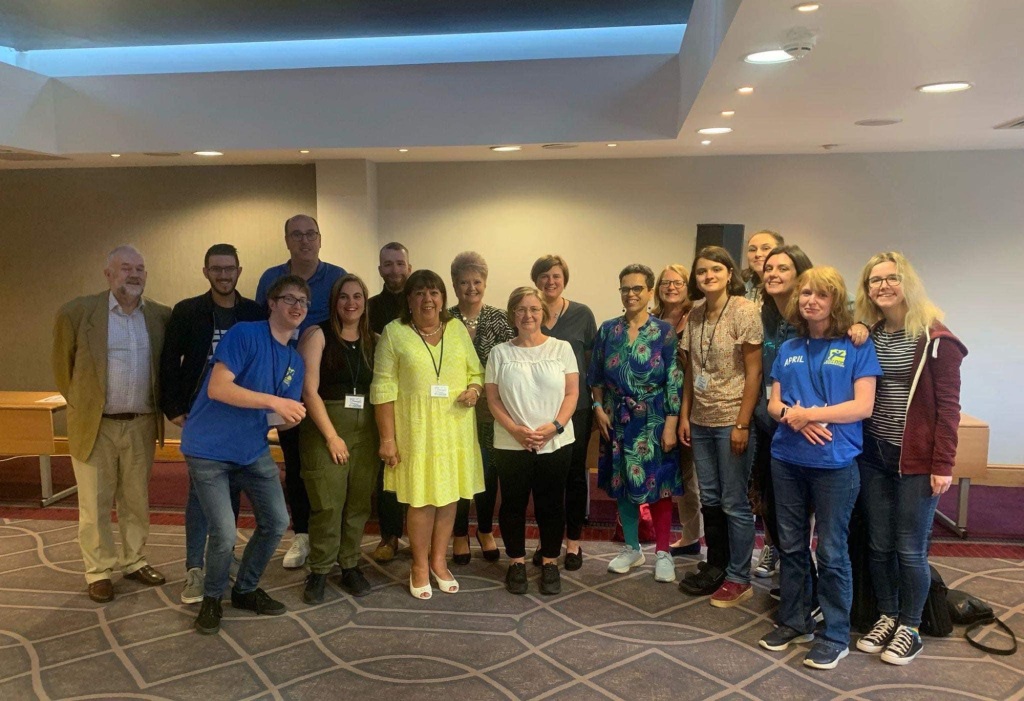
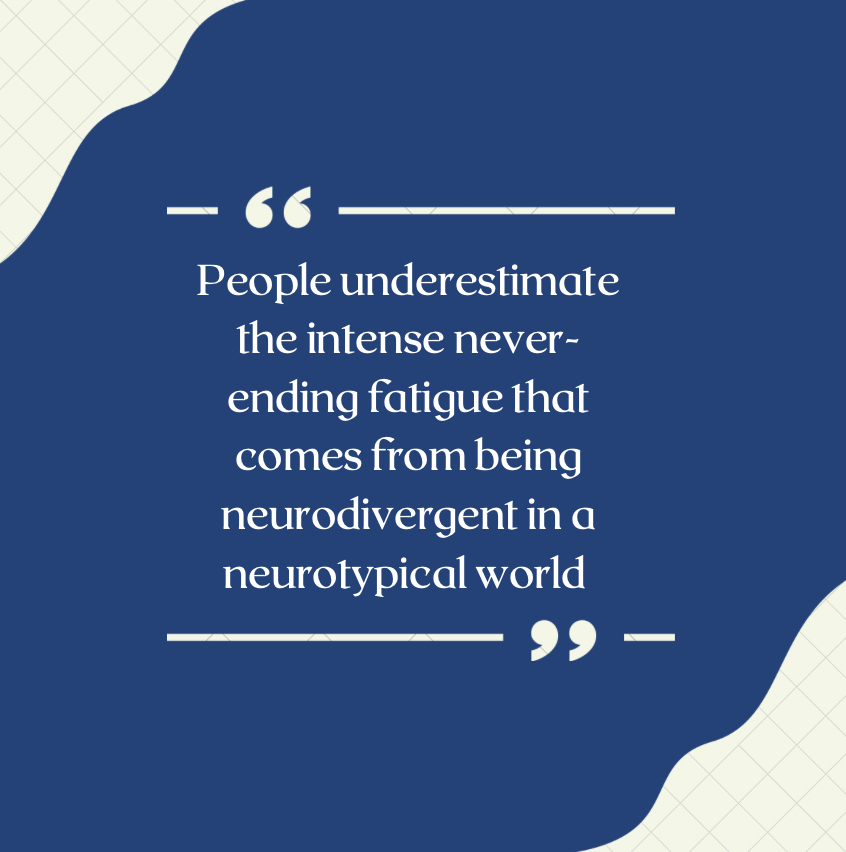


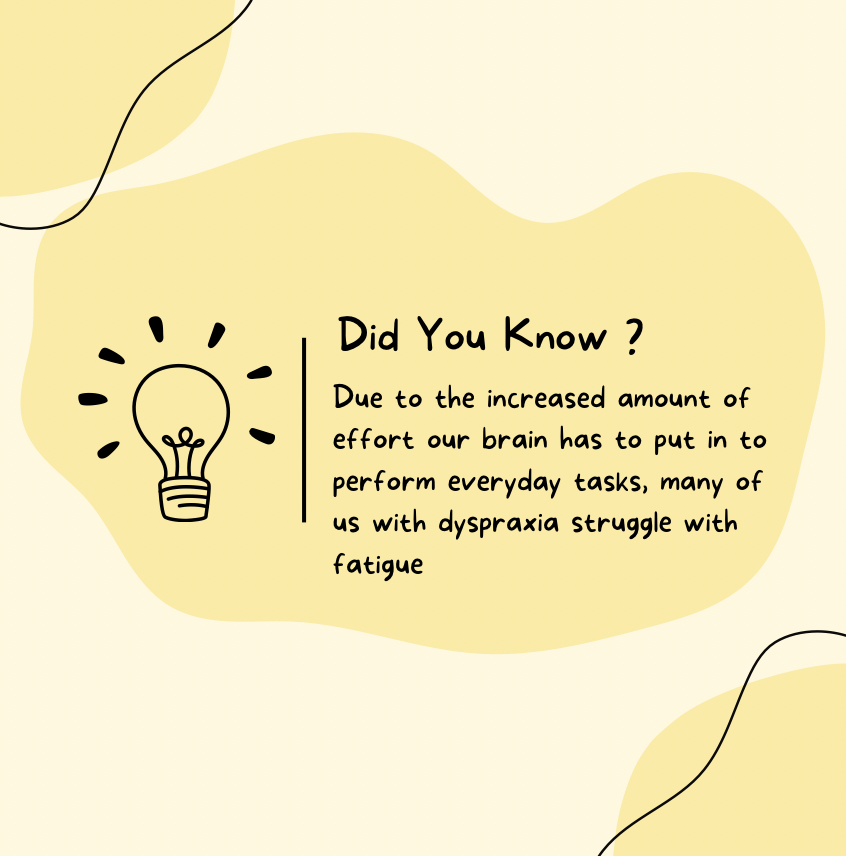
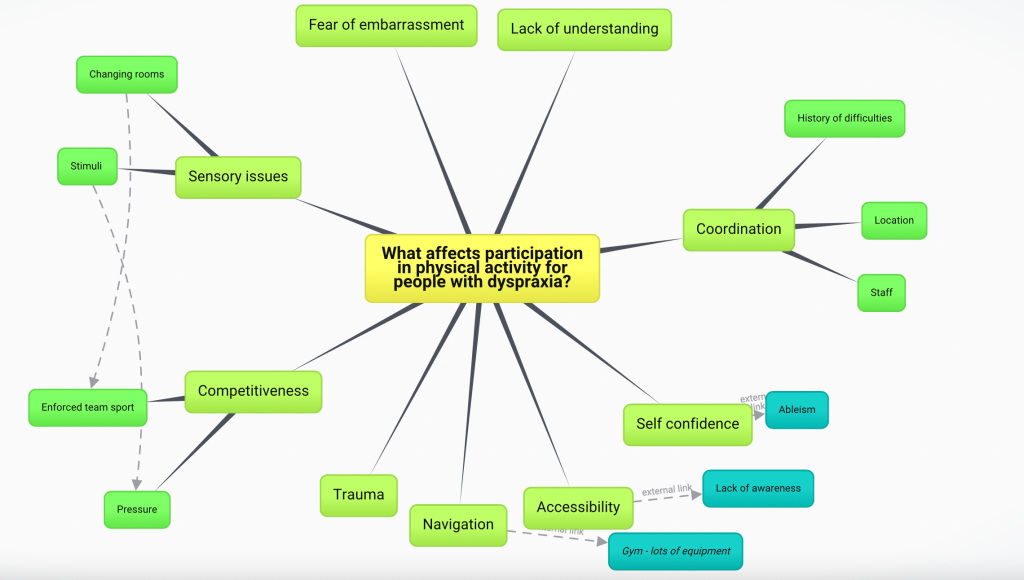





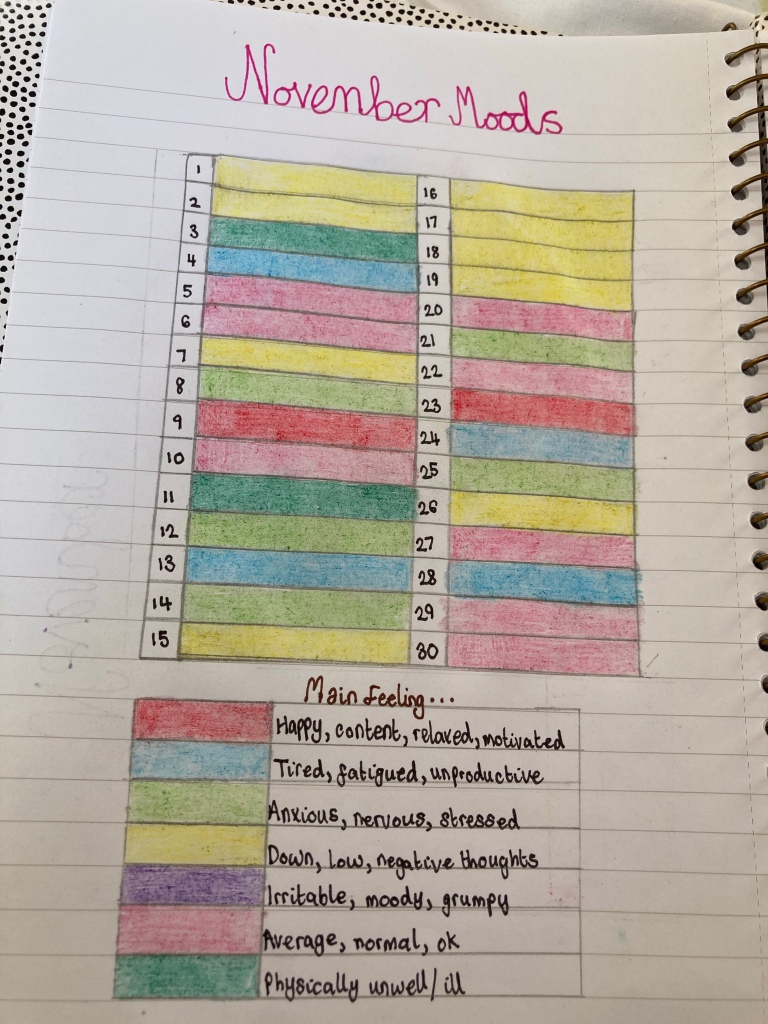


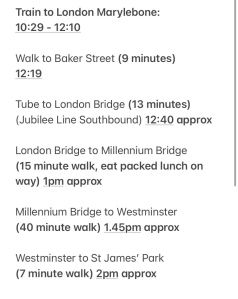
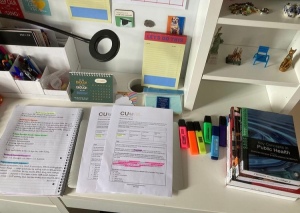




 Imogen’s blog